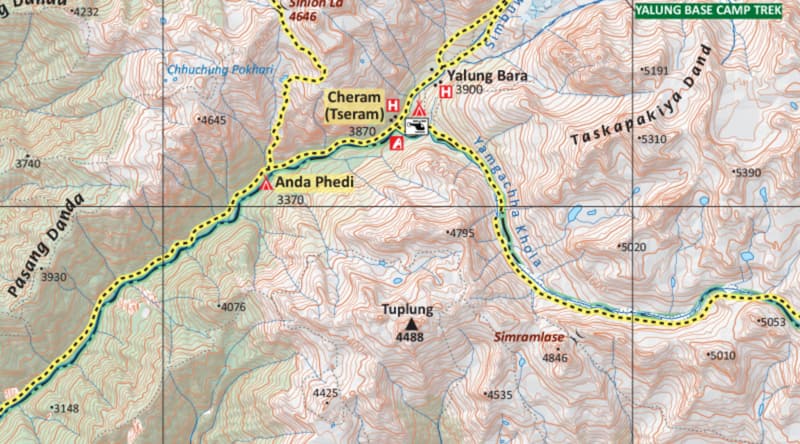
Introduction to Kanchenjunga South Base Camp Trek
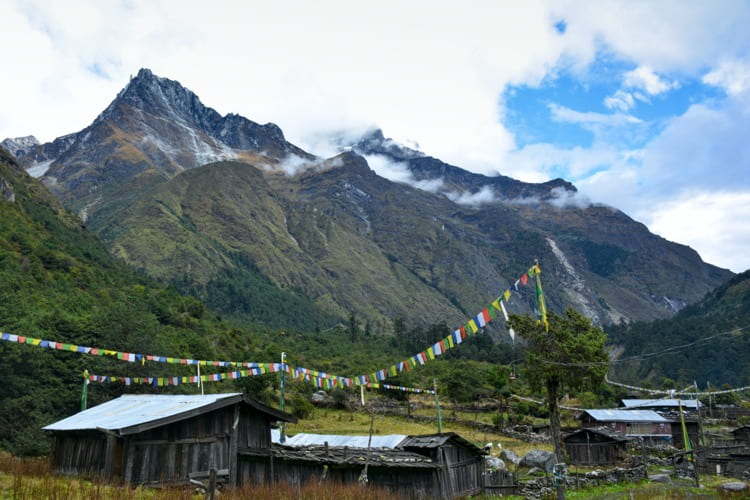
The Kanchenjunga South Base Camp trek explores the Yalung Glacier and the south side of Kanchenjunga, the third highest mountain in the world. Climbing slowly along the valleys the trail ascends through pristine forests, crop fields, and tranquil villages to the base camp situated at Ramche at 4,610m. This trek requires a good level of fitness and previous trekking experience to ensure enjoyment of this challenging, yet beautiful trek in this remote eastern corner of Nepal.
The base camp itself is situated at Ramche (4,610m), which is reached by following the trail through the Yalung Glacier, stopping a while at the viewpoint for Kabru, and Rathong peaks, which are part of the ridge that extends south from Kanchenjunga. In fact Kabru is the southern-most 7,000m peak in the world. From Ramche it is possible to hike to a ridge that offers views of the magnificent Kanchenjunga South Face and, a little ahead, views of the south face of Mount Janu, Nyukla Lanchung and other awe-inspiring Himalayan peaks can also be seen from here.
The Kanchenjunga South Base Camp trek offers views of sensational snow-capped mountain peaks plus a landscape of subtropical lowlands, rhododendron and alpine forests, and spectacular glaciers. Protected by the Kanchenjunga Conservation Area and the Sacred Himalayan Landscape initiative of the World Wild Life Fund (WWF), there is an abundant variety of wildlife including the elusive snow leopard, the Asian black bear, and red panda, to name just some of the more rare mammals. Bird lovers may get the chance to see the golden-breasted fulvetta, snow cock and blood pheasant, among others.
For those with good fitness and experience, a desire to see the third highest mountain in the world after Everest and K2, and an interest in nature, this is an inspiring trek
Kanchenjunga South Base Camp Trek Highlights
Kanchenjunga South Base Camp Trek Itinerary
Day 1: Kathmandu to Bhadrapur (Flight) and Drive to Fikkal/Kanyam
Fikkal/Kanyam – 1,500 m / 4,921 ft – 5-6 hrs
Your early morning flight to Bhadrapur takes around 45 minutes. Depending on the actual departure time you can have breakfast in your hotel in Kathmandu or you can grab something at the airport, or in Bhadrapur on arrival.
Your adventure starts with an early morning flight from Kathmandu to Bhadrapur, which takes about 45 minutes. You can have breakfast at your hotel, at the airport, or after you arrive. From Bhadrapur, you will drive through rolling hills and green tea fields to reach Fikkal or Kanyam, famous for its beautiful tea gardens. Once you arrive, you can walk around the tea estates and enjoy the fresh air.
Ilam
Day 2: Drive from Ilam to Taplejung
Taplejung – 1,800 m / 5,905 ft – 4-5 hrs
After breakfast in the tea hills you will continue your scenic drive deeper into the eastern part of Nepal. The first leg takes you to Taplejung, a bustling hill town that is the gateway to Kanchenjunga Conservation Area.
The road winds through forests and rural settlements, giving you glimpse of local life and culture.From Taplejung you will drive to Yamphuding, a remote village where your trekking adventure starts.
This village is surrounded by beautiful terraced fields and traditional houses. The drive today helps you cover a big distance so you can start your trek fresh tomorrow.
Taplejung
Day 3: Taplejung to Yamphuding
Yamphuding – 2,080 m / 6,824 ft – 6 hrs
Your trekking starts from Taplejung at 1,800 m / 5,905 ft, following a gentle trail that winds through terraced fields and traditional Limbu and Rai villages. You will pass through mixed forests of bamboo, rhododendron, and cardamom plantations, crossing small streams along the way. Villagers can be seen working in their fields, and you’ll get glimpses of their daily rural life and unique culture.
The trail is mostly gradual but can be slippery and muddy after rainfall, so good trekking shoes are a must. You’ll cross several suspension bridges over the Tamor and Kabeli rivers and walk through shaded forest sections alive with birdsong. By late afternoon, you will reach Yamphuding at 2,080 m / 6,824 ft, a large village surrounded by hills and farmland. Here you will spend the night in a local teahouse, enjoying the peaceful atmosphere and warm hospitality of the villagers.
Yamphuding
Day 4: Yamphuding to New Jhoroni
New Jhoroni – 2,700 m / 8,858 ft – 6 hrs
Your trekking starts with a gradual trail that passes through mixed forests and small streams. You will see traditional houses and villagers working in the fields. The region is home to diverse ethnic groups like Limbu and Rai and you will see their unique culture along the way.
The trail is mostly gentle but can be muddy in some places, especially after rain. You will cross suspension bridges over rivers and walk under the shade of rhododendron and bamboo forests. By late afternoon you will reach New Jhoroni, a peaceful spot where you will spend the night surrounded by nature sounds.
New Jhoroni
Day 5: New Jhoroni to Cheram
Cheram – 3,870 m / 12,696 ft – 7 hrs
Today’s walk takes you deeper into Kanchenjunga Conservation Area. The trail climbs gradually through lush forests of rhododendron, oak and pine. In spring these forests are filled with blooming flowers making the walk even more magical.
As you gain altitude you will start to see glimpses of the snow-capped peaks ahead. Small streams and waterfalls accompany you along the trail and you might spot birds or even signs of wildlife. After a steady day’s hike you will reach Cheram, a beautiful village surrounded by mountains. Overnight in Cheram.
Day 6: Rest and Acclimatization at Cheram
Cheram – 3,870 m / 12,696 ft – 3 hrs
Today is an important acclimatization day to help your body adjust to the higher altitude. Staying an extra day at Cheram reduces the risk of altitude sickness before you go even higher. Use this day to relax and explore the area at a slow pace.
You can take a short hike to nearby viewpoints for stunning views of the surrounding peaks and glaciers. Or spend time in the village, interacting with the locals and learning about their traditional lifestyle. Rest well tonight as tomorrow you will reach the highlight of the trek — Kanchenjunga South Base Camp!
Cheram
Day 7: Cheram to Kanchenjunga South Base Camp and back to Ramche
Ramche – 4,580 m / 15,026 ft – 6 hrs
This is the most exciting day of your trek! Start early for the hike up to Kanchenjunga South Base Camp. The trail takes you through moraine and glacial landscapes with incredible views of Mt. Kanchenjunga, the world’s third highest mountain and its surrounding peaks.
At the base camp take your time to soak in the breathtaking panorama and snap some memorable photos. It’s a humbling moment to stand so close to such massive Himalayan giants. After spending time at the base camp you’ll descend to Ramche for an overnight stay feeling accomplished and inspired.
Machhermo
Day 8: Ramche to Torongding
Torongding – 2,980 m / 9,777 ft – 7 hrs
Leaving the high alpine scenery behind you’ll begin your descent to lower altitudes. The trail retraces through beautiful forests, crossing streams and meadows. The downhill sections can be easier on the lungs but harder on the knees so take your time and enjoy the peaceful surroundings.
You’ll pass through rhododendron and bamboo forests with occasional wildlife and bird sightings. By afternoon you’ll reach Torongding, a quiet stopover point where you can rest, have a warm meal and share stories with fellow trekkers. Overnight at Torongding.
Torongding
Day 9: Torongding to Yamphuding
Yamphuding – 2,080 m / 6,824 ft – 6 hrs
Today you’ll continue your descent back to Yamphuding village following the same trail through forested hills and terraced farmland. As you get closer to Yamphuding you’ll pass familiar landmarks and appreciate the beautiful scenery you may have missed on the way up.
You’ll notice the warmer temperatures and lush greenery as you get lower. The local villages and fields feel welcoming after the rugged mountain terrain. Tonight you’ll stay in Yamphuding where you can celebrate the successful trek with your team.
Day 10: Yamphuding to Fikkal
Fikkal/Kanyam – 1,500 m / 4,921 ft – 5-6 hrs
Your trekking adventure comes to an end as you leave the trails behind and begin the drive back to Fikkal. The journey winds through hills, forests and farmlands giving you one last chance to enjoy the natural beauty of eastern Nepal.
In Fikkal you can relax and rest after the long days of hiking. Take a short walk through the tea gardens if you wish or simply enjoy a hot meal and a comfortable bed. Overnight in Fikkal
Day 11: Fikkal to Bhadrapur and Fly Back to Kathmandu
Bhadrapur – 91 m / 299 ft – 45 min
After breakfast you’ll drive to Bhadrapur Airport passing through tea estates and rural landscapes. From Bhadrapur you’ll take a short domestic flight back to Kathmandu.
Upon arrival in Kathmandu you’ll be transferred to your hotel where you can rest and reflect on your incredible Kanchenjunga South Base Camp trek. This once in a lifetime trek will leave you with memories of majestic mountains, remote villages and the warm people of eastern Nepal.
Not satisfied with this Itinerary?
Are you interested on planning custom trip? It only takes 2 minutes.
Includes
Veg
Wide variety of Vegeterian food is available on the trek
Vegan
Wide variety of Vegan food is available on the trek
Packing List
| Items | Details | Quantity |
|---|---|---|
| Underwear | Underwear Breathable synthetic | 3 |
| Socks | Wool BYO | 3 |
| Bra | Sports BYO | |
| Base layers – Pants | Merino wool BYO | 1 |
| Trekking shirt | Synthetic lightweight BYO or purchase it in Kathmandu | 2 |
| Rain pants | Synthetic lightweight Frogg Toggs are excellent | 1 |
| Trekking pants | Synthetic lightweight BYO or purchase in Ktm | 2 |
| Hiking Shoes/Boots | BYO Salmon Quest 4D or Xultra 3 or 4 | 1 |
| Camp shoes | Down booties BYO or purchase in Ktm | 1 |
| Gloves | One pair of thin merino wool. 2nd pair thick insulated | 2 |
| Hat | Sun hat or peak cap with neck protection. BYO | 1 |
| Down Jacket | BYO | 1 |
| Wind Breaker | BYO | 1 |
Note: Sleeping bags and down jackets can be rented in Kathmandu, while all other trekking equipment can be easily purchased. We at Magical Nepal will assist you in getting all your essentials sorted, ensuring you’re well-prepared for your adventure.
Kathmandu to Lukla Flight
Due to recent government regulations, there are no direct flights from Kathmandu to Ramechap. As a result, we must undertake a six-hour drive from Kathmandu to Ramechap. Since there are no good hotels in the area, we will need to depart at 1:00 AM to catch our flight to Lukla from Ramechap.
Read Before your book Kanchenjunga South Base Camp Trek
Before committing to the Kanchenjunga South Base Camp Trek, it’s important to understand that this is not a typical teahouse trek—it’s a remote, culturally rich, and physically demanding journey through eastern Nepal’s most pristine landscapes.
With limited infrastructure, basic lodging, and long trekking days, this adventure is best suited for those with prior trekking experience or strong physical fitness. At Magical Nepal, we provide detailed pre-trip briefings, customized itineraries, and expert guidance to ensure you’re fully prepared for both the rewards and challenges of this unforgettable Himalayan expedition.
This is a multi-day trek with two days at higher altitude. However, a good level of fitness is required to make this not just a successful, but also an enjoyable trek. If you have trekked before for many day, so much the better.
The trails are not tricky, but there are the usual ascents and descents you can expect in the Himalayas. Overall, it is a moderate trek for those with some experience.
Not ideal for: Those with severe altitude sensitivity, mobility issues, or unprepared beginners.
There are 11 actual trekking days on this trek. On other days you will be driving by road or/ and flying into the far eastern part of Nepal.
During the trekking days, it is an average of 5-6 hours walking through moderate terrain. Yes, there are the usual ups and downs found but nothing too strenuous for people with good health and stamina.
Teahouses – as trekking lodges are called in Nepal – are quite basic. You will sleep here and take dinner and breakfast here. Every night it is a different teahouse. Lunch will most likely be taken on the trail.
You will set off after breakfast around 8am to make the most of the day. With short breaks along the way, you can walk at your own steady pace.
On reaching the next overnight teahouse you can relax in the social dining room over dinner before retiring for the night.
Kanchenjunga Conservation Area Permit: is required to trek to both the North Base Camp and the South Base Camp, as they both fall within the conservation area. The fees from the KCAP go towards the conservation and preservation of the area.
Cost per person: USD30 per trek.
Restricted Area Permit: is required for anyone entering a restricted area. Usually, that means the location is near the Tibet border.
Cost per person: USD20 per week, for up to the first four weeks.
**These permits must be obtained through a registered Nepali trekking agency, like Magical Nepal, and the RAP must be issued for a minimum of two international trekkers.
Breakfast, lunch, and dinner are included in the cost of your trek. If you wish to have soft drinks, beer, or anything extra, you will pay the teahouse directly for that.
Breakfast and dinner on the trek are taken in the teahouses (trekking lodges) where you sleep, and lunch is taken on the trail.
As this area is less popular than some of the more established trekking routes, it is less crowded, which is a good thing for you. On the other hand, because it sees fewer foreign trekkers, facilities are more basic than in some of the busier areas. Teahouses tend to have fewer facilities than, say, in the Annapurna region.
Foodwise, you will be offered Nepali, Chinese, and some Western items.
Sample menus are as follows:
Porridge
Tibetan bread
Eggs
Pancakes
Muesli
Tea
Chapatis
Garlic Omelets
Oatmeal Porridge
Boiled Eggs
Boiled Potato
Swiss Roasti
Tibetan bread
Eggs
Pancakes
Muesli
Tea
Dal Bhat
Rice, lentils & veggies
Momo
Tibetan dumplings
Thukpa
Noodle soup
Chowmein
Fried noodles
Macaroni/Pasta
With egg or vegetables
Soups
Vegetable, garlic
Spring Roll
with Egg, tuna or potato
Fried Rice
With egg, vegetables, or tuna
Noodles
with Vegetable, Egg
Spaghetti
with Tomato Sauce
Fried Rice
With egg or vegetables
Curry
Vegetable, Egg, Potato
- Buy those snacks! Buy in Kathmandu do not wait till you are on the trek. They will not be available.
- Tell the teahouse to keep hot spices to a minimum.
- Even if you are very tired, do not skip meals.
At Magical Nepal, your safety is our top priority, especially on remote routes like the Kanchenjunga South Base Camp Trek. This trek reaches elevations up to 4,780 meters (15,682 feet) and takes you far from urban centers, making it essential to travel with a qualified team.
Our government-licensed guides are not only locals who know the terrain intimately but are also trained in first aid and altitude-related emergency protocols. We build extra acclimatization days into your itinerary and monitor your health daily to reduce the risk of Acute Mountain Sickness (AMS).
Because this is a restricted trekking area, regulations require you to travel in a registered group with a licensed guide, which also ensures a higher level of safety and oversight.
Mobile signals are limited beyond certain villages, so we equip our teams with satellite phones or radio devices in case of emergencies.
In the event of illness or injury, we coordinate with local authorities and insurance providers to arrange helicopter evacuation when needed. With Magical Nepal, you can embark on this remote adventure with confidence, knowing that every detail—from emergency planning to daily check-ins—is carefully managed.
Trekking lodges are known as teahouses in Nepal and they vary from being pretty up-market in the busier areas, to being still very much as they were 20 years ago in the more remote areas.
In this area they are still quite basic – two single beds to each sleeping room, maybe a chair, most likely not attached bathrooms. Shared bathrooms are normal in remote and/ or higher altitude places. Hot showers are available but they have to be paid for and may come in a bucket.
Sleeping rooms do not have heating, only the dining room does.
- There is no heating or sockets in the sleeping rooms, those ‘luxuries’ are only found in the dining room.
- If the teahouse does not have sleeping rooms with attached bathrooms, you will have to use a shared one.
- The dining room is the center of social activities in teahouses.
- Hot water for the shower will cost around USD2-5 per time.
- Recharging your electronics will cost around USD2-5 per time as well.
- WiFi, where available, is also something you will have to pay for.
- It is a good idea to bring your own sleeping bag.
- If you are traveling in a group we recommend trying to order the same items then it is faster for the kitchen and you get to eat earlier.
Public transport is included in the cost of your trek. Usually a bus or jeep. Should you wish to hire a private jeep, please talk to us about this. There will be an extra cost for this which can be divided between the trekkers in your group. Everyone must agree however so the guide can accompany you all! See Private v Group Trek.
Taplejung Airport
Why do you have to travel over two days by road from the airport at Bhadrapur to Taplejung when there is an airport at Suketar, Taplejung? We could answer in one sentence: it’s the unpredictable weather in the Himalayas. But let us expand on that. Suketar airport, more of an airstrip, sits at the height of 2,419m / 9,736 ft in the mountains. There are only two flights a week, and only at certain times of the year. With weather being unpredictable as we said, should your flight be canceled on a particular day due to bad weather, then you may have to wait a few more days, or even a week for the next one.
Therefore, for this reason, we have taken the decision to use Bhadrapur airport in the lowland region of the country, and then travel by road through the foothills and into the mountains at Taplejung. One plus is that you get to see the tea gardens in Ilam!
If you would like us to pick you up at the Tribhuvan International Airport on your arrival in Nepal please let us know on the booking form. There is a small charge for this, but it will be simpler and easier than trying to organize a taxi when you arrive.
Hotels in Kathmandu:
There are many excellent hotels on booking.com or hostelworld.com. Thamel is where most visitors stay as it is an area full of cafes, restaurants, bars and shops all geared for international visitors.
Our office is also located in Thamel.
What to do in Kathmandu:
Explore! There are many UNESCO sites and other fascinating historical places in Kathmandu. We can organize a half or full day tour for you or you can explore yourself. Ask us about our tours.
Visa on Arrival
Visa on arrival is available for people from most countries, via the Immigration Department of Nepal’s on-line site. Please complete the form online, print it out and bring it with you. Bring exact USD cash to make payment on arrival at the airport.
Visa on arrival is valid for 15 days, 30 days or 3 months and costs:
90 Days – 125 USD
15 Days – 30 USD
30 Days – 50 USD
For the Kanchenjunga South Base Camp Trek, hiring a porter is highly recommended—and in many cases, essential. This is a remote and demanding trek with long daily walking hours, steep climbs, and basic infrastructure.
The trail passes through rugged terrain where you may be carrying gear for both teahouse stays and possible camping nights. With elevations reaching up to 4,780 meters (15,682 feet), even experienced trekkers can find the load exhausting over multiple days.
At Magical Nepal, we provide reliable and well-compensated porters who are accustomed to the route and trained in responsible trekking practices. Each porter can carry up to 20 kg (44 lbs) of your load, allowing you to focus on the trail, enjoy the views, and conserve energy, especially important at altitude.
Hiring a porter also supports the local economy and gives you greater flexibility to pack essential gear like warm clothing, snacks, and extra layers without overburdening yourself. If you’re looking for a more enjoyable and manageable trekking experience in one of Nepal’s most remote regions, having a porter by your side is a smart and respectful choice.
The best seasons to trek to Kanchenjunga South Base Camp are spring (March to May) and autumn (late September to early November). These periods offer the most favorable conditions for visibility, trail safety, and overall comfort.
In spring, the rhododendron forests are in full bloom, adding vibrant colors to the landscape, while the weather is generally mild and stable. Clear skies during this season also allow for excellent views of the Kanchenjunga massif and the surrounding Himalayan peaks.
In autumn, post-monsoon clarity makes for some of the clearest mountain views of the year, and temperatures are cool but manageable, especially at higher altitudes like Oktang (4,780 meters / 15,682 feet).
Both seasons are ideal for avoiding landslides, snow blockages, and leech-infested trails that can occur during monsoon (June to August) or winter (December to February). At Magical Nepal, we schedule treks during these two prime windows to ensure you experience the beauty and challenge of Kanchenjunga under the safest and most scenic conditions possible.
The trek’s price includes food, accommodation, transport, and the guide. But there are some other items you will need to pay for.
Cash:
- You will need Nepali rupees for anything you buy along the way.
- For tipping your guide and porter (if you have one) you can use foreign currency or Nepali rupees.
Transport: Aside from flying, transport is by public bus or public jeep. This can be arranged before the trek if you would like to hire a private jeep for any land travel. Please discuss the cost of this with us.
Food: Three meals a day and tea/ coffee are included. Anything extra, such as cold drinks, need to be paid directly by you to the teahouse.
In the teahouse: Also, to be paid directly by you to the teahouse are: hot water for a shower, electricity to charge your devices, and Wi-Fi. The cost is normally around USD2- 5 for each, each time.
Boiled drinking water is available as is beer and cold drinks. You will pay these directly to the teahouse. All in Nepali rupees.
Tips: Please calculate the tips for your guide and porter, which can be paid in dollars or other currencies. We suggest the tip for the guide to be around USD200, and your personal porter around USD150.
The guide’s tip is divided between the number of people on the trek. Your personal porter’s tip is paid by yourself.
Please note, tips will vary on different treks depending on the length of the trek. For example, if your trek takes 5 days or 20 days it makes a difference to the time you spend with your guide.
We can recommend you bring around USD 15 to 20 per day, in Nepali rupees, plus the tips for the guide and porter.
While trekking to Kanchenjunga South Base Camp, communication options are limited and vary depending on your location. Some lower-altitude teahouses—particularly in villages like Khebang or Yamphudin—may offer WiFi or mobile network access, but connectivity becomes increasingly unreliable as you ascend.
Bad weather, mountainous terrain, and power issues can all interfere with signals. Even when WiFi is available, it is usually slow and paid separately from your accommodation. In higher sections like Tseram or Oktang, you should expect to be completely off-grid.
Tips for Communication
To stay connected when possible, we recommend purchasing a local NTC (Nepal Telecom) SIM card upon arrival at Tribhuvan International Airport in Kathmandu. These SIMs offer affordable data packages and are effective in the lower regions of the trek. Among the two, NTC tends to have better coverage in remote eastern Nepal, but neither provider guarantees a consistent signal at higher altitudes.
Booking your Kanchenjunga South Base Camp Trek with Magical Nepal means choosing local expertise, safety, and personalized care on one of Nepal’s most remote and rewarding routes.
We specialize in off-the-beaten-path adventures, and our deep knowledge of the Kanchenjunga region ensures that your journey is both authentic and well-supported. From handling all logistics—permits, transport, and accommodation—to providing experienced, government-licensed guides and caring porters, we make sure every detail is covered so you can fully enjoy the trail.
Unlike generic tour operators, Magical Nepal is committed to ethical travel and community-based tourism. We hire from local villages along the route, support conservation efforts, and operate with a strong safety-first policy—including acclimatization planning and 24/7 emergency coordination.
Our clients appreciate our transparent pricing, honest advice, and flexibility in crafting custom itineraries that match your pace and preferences. With Magical Nepal, you’re not just booking a trek—you’re joining a team that treats you like family, every step of the way.
Want to read later?
Download the PDF and read it later.