Introduction to Upper Dolpo Circuit Trek
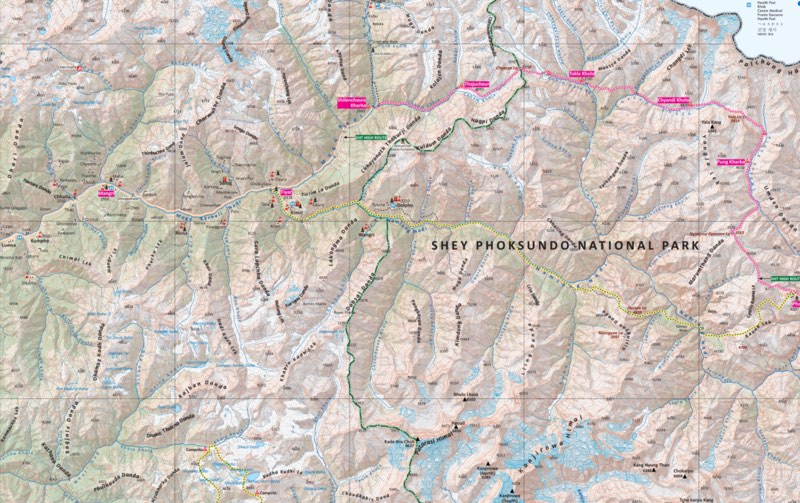
Dolpo lies in the remote north west of Nepal, between the Tibetan Plateau and Dhaulagiri mountain ranges. The Upper Dolpo trek takes in, as the name suggests, the upper part of this region, which is even more remote and rarely visited. Only opened to visitors at the end of the 1980s, Upper Dolpo is still considered a restricted area and requires a special permit.
Phoksundo Lake; Shey Gompa; Bon Po practitioners; Buddhist monasteries; views of Dhaulagiri; Crystal Mountain (a mountain whose cliffs are laced with quartz and marine fossils); unique Tibetan cultures; the magnificent and rare snow leopard – all of these may sound familiar. And yes, they are, made so through Peter Matthiessen’s book “The Snow Leopard” and Eric Valli’s film of Dolpo life, ‘Himalaya’.
While Dolpo is in general a dry, bare place, it is laced with fast flowing rivers, roaring waterfalls, deep river gorges, lush meadows, and valleys of tilled fields. Remote villages with interesting cultures, including the Bon Po religion, and of course the beautiful icy waters of Phoksundo Lake are other attractions in this region. As part of Dolpo falls within the Shey Phoksundo National Park, the wildlife, such as the snow leopard, rare Himalayan blue sheep, goral, thar, Himalayan black bear etc. is protected.
This three week trek is not for the faint-hearted as trails are difficult, high, steep, shaky, and sometimes barely there. Long walking days at high altitude are the norm with several high passes to cross, but for those with the stamina, fitness level and sheer willpower, this trek is definitely a once-in a lifetime trip.
Upper Dolpo Circuit Trek Highlights
Upper Dolpo Circuit Trek Itinerary
Day 1: Kathmandu to Nepalgunj (Flight)
Nepalgunj – 150 m / 492 ft
After breakfast, your guide will collect you from your hotel and take you to the domestic terminal of the Tribhuvan International Airport. There you will board your short flight to Nepalgunj.
Situated in the western part of the Terai, as the lowland area of Nepal is called, Nepalgunj has a border crossing to India. Because of this, it takes on a feel of being a mix of Nepal and India. There is time to explore some of the locations, such as temples, in this area before dinner.
Over dinner, your guide will brief you about the upcoming journey.
Notes: Flight schedules may change due to weather.
Nepalgunj
Day 2: Nepalgunj to Jhupal (Flight) to Dunai
Dunai – 2850 m / 9350 ft
After breakfast, it’s back to the airport to catch a morning flight to Jhupal. You are leaving the Terai behind and entering the mountains!
On arrival at Jhupal airport, you will meet your porters and camping crew. There will be time for a cup of tea and a snack before setting off to hike the part of the trek.
Although it’s an easy hike today, the trail ascends above the Thulo Bheri Valley and through cultivated fields to the village of Kalagaunda. Continue past Roop Ghar village which has a traditional water mill, following the river, and on to Dunai.
Note: These timings are approximate and may change based on trekking pace and trail conditions.
Dunai
Day 3: Dunai to Ankhe
Ankhe – 2896 m / 9501 ft
You will be hiking through the Thulo Bheri Valley and then through the Phoksundo River Valley, starting with a steep climb out of Dunai.
The trail consists of a lot of ups and downs; one of them being to a ridge with a great view of Kagmara Peak which you can see further up the valley. There are also small settlements to cross: Dhera known for its walnut groves, and Rahagaun known for its gompa dedicated to the guardian of the village – Mastha.
As you continue, there is a canyon to descend into where the forest is dense and chilly. Then cross a river to finally reach Ankhe village.
Note: The trail around Ankhe involves steep ascents and descents.
Ankhe
Day 4: Ankhe to Sulighat
Sulighat – 3180 m / 10433 ft
After breakfast you descend through juniper and pine forests and cross a wooden bridge, ascending again through a valley which offers you fantastic views of the mountains Once you have reached the highest point, you will also get a great view of the valley below.
There is a checkpoint at Silughar where they will inspect your permits. Now you have officially entered Shey Phoksundo National Park! This is also the first-night camping.
Note: Trekkers must register their permits here before continuing toward Phoksundo Lake.
Sulighat
Day 5: Sulighat to Phoksundo
Phoksundo – 3612 m / 11850 ft
Today is one of the main highlights of this trek – today you will reach Phoksundo Lake!
You will see the confluence of two rivers today also – the Phoksundo and the Pungmo rivers. You will also see Phoksundo waterfall, one of the highest waterfalls in Nepal. From here there are great views of the lake itself.
On the way to the lake, we pass through Ringmo Village, the nearest settlement to Phoksundo. This little village has mani walls (walls made of stones with Buddhist mantras carved into them) and chortens (stupas) making it known to all that the inhabitants follow Tibetan Buddhism.
It is here you will get your permits checked again as you are now about to enter the Shey Phoksundo National Park which you can see ahead.
Tonight, the camp is set up near the Phoksundo Lake with its clear turquoise waters. What a setting!
You may have seen Phoksundo Lake in the late 1990’s film by Eric Valli, ‘Himalaya’, now see it for real.
Note: Swimming or bathing in the lake is prohibited as it is a sacred site.
Phoksundo Lake
Day 6: Acclimatization Day
Phoksundo – 3612 m / 11850 ft
Enjoy a leisurely breakfast in this perfect setting of a campsite.
You could, if you are feeling energetic, hike back to take a closer look at Ringmo village. Or you could simply enjoy the environment and do a little yoga or meditation – what a setting for meditation!
Did you know Dolpo and Phoksundo Lake star in Eric Valli’s 1999 film ‘Himalaya’?
This fictional film, yet very realistic of the local lifestyle in many ways, tells the story of villagers who take a caravan of yaks across the mountains carrying salt to trade for grain in the lowlands.
The film shows the rivalry between the chief of the tribe, Tinle, and a young herdsman, Karma. The film unfolds and eventually, Tinle dies in the mountains as a result of a snowstorm. Tinle’s monastic son, Norbu, honors his father by painting a monastery wall with the caravan’s adventures.
Whereas the main actors, Gurgon Kyap as Karma and Lhakpa Tsamchoe as love interest Pema, are not from Nepal, Thinle Lhondup, as Tinle, was a native of Dolpo with no previous acting experience.
Sadly, Thinle died in 2016 in Dolpo – as he would have wanted we believe. Mention should go to the many other locals who played in this film, and to Nepal’s own Jampa Kalsang who went on to star in many other film productions.
Notes: Use this rest day to relax, explore Ringmo village, or simply enjoy the breathtaking scenery.
Day 7: Phoksundo to Phoksundo Khola Camp
Phoksundo Khola Camp – 3507 m / 11505 ft
Start the day by following the eastern shore of Phoksundo Lake on a relatively flat trail along a riverbed then come to meadows scattered with boulders. With the wonderful lake nearby and Kanjirowa Himal overhead, this is a stunning day’s trek.
Note: Camping facilities are basic, with no tea houses along the route—ensure you have enough supplies.
Phoksundo Khola Camp
Day 8: Phoksundo Khola Camp to Phoksundo Bhanjyang
Phoksundo Bhanjyang – 3910 m / 12828 ft
Today’s hike starts by ascending through a narrow trail that takes you through a glacier valley. You will cross various mountain streams several times today until there is a long climb up to a green pasture which you cross to reach another valley (via an ascent) with views of the Kang La Pass and other peaks such as Chhamlang.
Note: The trail to Phoksundo Bhanjyang is steep and demanding, requiring good physical fitness.
Phoksundo Bhanjyang
Day 9: Phoksundo Bhanjyang to Shey Gompa
Shey Gompa – 4500 m / 14763 ft
After breakfast, be prepared for a strenuous hike over the Kang La Pass at 5,350 m / 17,552.4 ft. This is one of the hardest days on the trek although you are rewarded by fantastic panorama views from the top of the prayer flag-covered pass.
The downhill section starts steep but then becomes more gradual as you get closer to Shey Gompa. The village is very small, with only a few houses, but it is the monastery that is the main attraction.
Mythology tells that Shey Gompa was built when a follower of Buddha arrived on the back of a flying snow lion to fight a fierce local mountain spirit. Shey Gompa was built on the site of this battle. Situated nearby is Crystal Mountain.
Note: The high altitude and rugged terrain make proper acclimatization essential before reaching this sacred site.
Shey Gompa
Day 10: Acclimatization Day
Shey Gompa – 4500 m / 14763 ft
After breakfast take the time to explore the surroundings including Crystal Mountain, which is sometimes called the Kailash of Dolpo.
With Shey Gompa being the most revered monastery in Dolpo, the nearby Crystal Mountain also holds spiritual significance to Buddhists.
The mountain gets its name from the veins of quartz crystal on the base of the mountain, which sparkle in the sunlight. During the full moon in July/ August, many pilgrims come to circumnavigate the mountain. This is a very interesting time to visit.
Note: The high altitude requires proper acclimatization—avoid strenuous activity and stay hydrated.
Day 11: Shey Gompa to Namduna Gaon
Namduna Gaon – 4800 m / 15748 ft
Today view the Tibetan Plateau from the top of a pass. Look the other way and see Mustang in Nepal to the east.
After hiking over the past, you will descend into grazing pastures and fields that surround Nam Gaun Gompa. There are likely to be nomadic tents, made of yak hair, on the pastures as the herders graze their yaks and sheep.
There is another gompa, Namduna Gaun, to visit and compare to others you have visited.
Note: The trek to Namduna Gaun involves steep climbs and rugged terrain.
Namduna Gaon Gompa
Day 12: Namduna Gaon to Saldang
Saldang – 3620 m / 11876 ft
The first task of the day is to climb to the top of the valley from where you can see fertile patches of cultivated land. Then continue downwards towards Saldang.
Saldang is the largest village in Inner Dolpo situated in the dry trans-Himalayan zone. It is not one, but five settlements spread over a large open slope. Being in such a strategic location on the trade route between Tibet and Nepal, Saldang has been quite a prosperous village. And remains an interesting village to experience.
Note: The terrain leading to Saldang is challenging, so proper acclimatization is necessary.
Saldang
Day 13: Saldang to Yangze Gompa
Yangze Gompa – 4960 m / 16272 ft
It’s a short hike today along a windswept path at the side of the Nagon Khola (river). You will hike through the villages of Marang and Ki and cross the Panzang River to reach Yangze Gompa.
It is thought Yangze Gompa is over 1,000 years old – it certainly looks impressive because of its size and many chortens (stupas).
Take time to explore the gompa and join the monks at evening prayers.
Note: The trek to Yangze Gompa involves steep and rugged trails, making it physically demanding.
Yangze Gompa
Day 14: Yangze Gompa to Sibu
Sibu – 4560 m / 14960 ft
By now you are very familiar with the many gompas in Dolpo, and today you will pass more on your trek to Sibu.
Tonight, the camp will be made on the river bank near Sibu, another beautiful location to be sleeping under the stars.
Note: The trail leading to Sibu is relatively moderate, but the following day involves a steep ascent toward Jeng La Pass.
Sibu
Day 15: Sibu to Jeng La Phedi
Jeng La Phedi – 4900m / 16075 ft
Jeng La Phedi means ‘Jeng La Pass base’ so as you can imagine, you will be reaching the base of this pass today in order to climb over it tomorrow.
Following the Nagon Khola (river) you may see yak caravans on the trail as they head to their grazing grounds. Overall, today the trail is rocky hills at high altitude with strong, and cold winds.
Thankfully there is hot tea, followed by dinner, waiting at the campsite.
Note: The trail to Jeng La Phedi can be steep and rocky, so good physical fitness and acclimatization are essential before tackling the pass.
Jeng La Phedi
Day 16: Jeng La Phedi to Tokyu Gaon via Jeng La Pass
Tokyu Gaon – 4209 m / 13809 ft
Today you will go over the Jeng La Pass at 5,150 m / 16,900 feet. Although not a long climb to the top (around 2 hrs) it is steep and challenging due to the high altitude. From the top the views of the Dhaulagiri Massif are stunning.
Descend to the Tarap Valley and its extensive plains and with the Tarap Chu (river) running through it. On this flat land there are around 10 villages to be found, each with their cultivated lands, gompas and chortens.
Note: Trekkers should be prepared for a rustic experience and carry necessary supplies.
Tokyu Gaon
Day 17: Tokyu Gaon to Dho Tarap
Dho Tarap – 4040 m / 13254 ft
After breakfast, hike to Dho Tarap which sits in a fertile valley with plenty of agricultural land/ Buckwheat, barley, and potatoes are grown by the mainly Magar inhabitants of the village. The houses are of traditional design based on Tibetan influence.
This is the village shown in the film ‘Himalaya’.
Here the population follow both Buddhism and Bon Po religion – which pre-dates Buddhism and also comes originally from Tibet.
Note: Due to its high altitude, acclimatization is essential to avoid altitude sickness.
Dho Tarap
Day 18: Acclimatization Day
Dho Tarap – 4040 m / 13254 ft
Today there is the opportunity to rest and relax, so you can enjoy an extra hour in bed and eat a late breakfast.
Looking round the village you come to a Buddhist Gompa which you can enter. Around half an hour’s walk away is a Bon Gompa which you can visit and compare.
Bon is a Tibetan religion that shares many similarities and influences with Tibetan Buddhism but is a minority religion in Tibet. Followers of Bon, say the religion originated in Zhangzhung kingdom, near Mt Kailash, and from here it came to Tibet.
In 2019, it was estimated to be around 400,000 Bon followers on the Tibetan plateau. Like Tibetan Buddhism, during the Chinese cultural revolution, the approximately 30 Bon monasteries in Tibet were destroyed (but allowed to rebuild after 1980). Today the spiritual head of the Bon is Menri Trizin Rinpoche. Bon monasteries can be found in Nepal and Tibet.
Note: Expect a completely off-the-grid experience with no WiFi or mobile signal.
Day 19: Dho Tarap to Tarap Khola
Tarap Khola – 3800 m / 12467 ft
Today leave Dho Tarap and hike down to a wide valley after passing through juniper bushes and wild roses.
You will pass the confluence of the Tarap Chu and Lang Khola rivers and some switchback trails as you head down to the Tarap Khola (river). As the altitude lowers the vegetation begins to change from pasture land to alpine vegetation.
You will again camp near a river – the ambiance being peaceful and stunning.
Note: The trail along Tarap Khola can be challenging, with narrow paths, river crossings, and occasional landslides
Tarap Khola
Day 20: Tarap Khola to Khani Gaon
Khani Gaon – 3150 m / 10334 ft
Follow the Tarap River and its gorge on a narrow trail. There are some stone stairs to negotiate so care should be taken on potentially loose stones.
Arriving by lunch time, there is time to interact, if possible, with the local people of Khani Gaon as this village sees more trekkers than many of the others you have visited on this unique trek.
Note: The terrain leading to Khani Gaon can be steep and challenging, with narrow trails and river crossings along the way.
Khani Gaon
Day 21: Khani Gaon to Tarakot
Tarakot – 2537 m / 8323 ft – 5 hrs
Today there is a suspension bridge to cross before following the river along an ascending and descending trail. This is a demanding day as there may be stepping stones to negotiate to cross the river at some points. Beware, they can be slippery.
As you approach Tarakot – an old fortress town, more cultivated crops are seen. Before the Gorkha dynasty came into being, Tarakot was the capital of this area. You can also find Sandul Gompa a little east of Tarakot near the Barbung and Tarap Chu rivers. The Gompa once collected tolls for trading caravans coming this way.
Note: The route to Tarakot includes some steep sections and river crossings.
Tarakot
Day 22: Tarakot to Dunai
Dunai – 2850 m / 9350 ft
It is mainly downhill today. Then walk along the Bheri River as you hike towards the end of this circuit trek.
Tonight, you can stay in a teahouse and have the things you missed in the camp, like soft drinks and beer!
Note: Enjoy the peaceful river landscapes and the surrounding mountains as you make your way downhill.
Day 23: Dunai to Jhupal
Jhupal – 2320 m / 7611 ft
Your final day of hiking, but the last hour is a touch uphill one! Just to remind you that you cannot beat the Himalayas!
Once you arrive in Jhupal you can celebrate with more soft drinks and beer perhaps!
Jhupal is a former Village Development Committee (VDC) in Dolpo district and is now part of the Thuli Bheri Municipality. With its scenic background of mountains, Jhupal is the main gateway to Upper Dolpo and a starting point for many treks. There are some small shops and teahouses and perhaps even WiFi!
Jhupal
Day 24: Jhupal to Nepalgunj (Flight) to Kathmandu (Flight)
Kathmandu – 1300 m / 4265 ft
Today it’s a short flight back to Nepalgunj then a change of flight on to Kathmandu.
Not satisfied with this Itinerary?
Are you interested on planning custom trip? It only takes 2 minutes.
Includes
Veg
Wide variety of Vegeterian food is available on the trek
Vegan
Wide variety of Vegan food is available on the trek
Packing List
| Items | Details | Quantity |
|---|---|---|
| Underwear | Underwear Breathable synthetic | 3 |
| Socks | Wool BYO | 3 |
| Bra | Sports BYO | |
| Base layers – Pants | Merino wool BYO | 1 |
| Trekking shirt | Synthetic lightweight BYO or purchase it in Kathmandu | 2 |
| Rain pants | Synthetic lightweight Frogg Toggs are excellent | 1 |
| Trekking pants | Synthetic lightweight BYO or purchase in Ktm | 2 |
| Hiking Shoes/Boots | BYO Salmon Quest 4D or Xultra 3 or 4 | 1 |
| Camp shoes | Down booties BYO or purchase in Ktm | 1 |
| Gloves | One pair of thin merino wool. 2nd pair thick insulated | 2 |
| Hat | Sun hat or peak cap with neck protection. BYO | 1 |
| Down Jacket | BYO | 1 |
| Wind Breaker | BYO | 1 |
Note: Sleeping bags and down jackets can be rented in Kathmandu, while all other trekking equipment can be easily purchased. We at Magical Nepal will assist you in getting all your essentials sorted, ensuring you’re well-prepared for your adventure.
Read Before your book Upper Dolpo Circuit Trek
To help you determine if the Upper Dolpo Circuit Trek is right for you, we’ve provided detailed information on key aspects such as flight details, trek difficulty, and the best times to visit. Each section also includes a video explanation to guide you in planning your trip smoothly.
If you’re still unsure whether this trek is the perfect choice for you, feel free to reach out to us via email or WhatsApp. We’ll get back to you within 24 hours to answer any additional questions.
Fly out of Kathmandu to the western side of the country, then again another flight up north. Dolpo is the largest district of Nepal as well as being one of the most remote, less populated, and less visited by trekkers.
Here you will find the Shey Phoksundo National Park, the only trans-Himalayan national park in Nepal. The World Wildlife Fund (WWF) has worked extensively in this region to preserve its diversity, culture, and ecosystems.
The Upper Dolpo Circuit Trek takes you around Upper Dolpo in three weeks, crossing high mountain passes and mountain rivers until you return to your starting point: a circuit.
Fly out of Kathmandu to the western side of the country, then again another flight up north. Dolpo is the largest district of Nepal as well as being one of the most remote, less populated, and less visited by trekkers.
Here you will find the Shey Phoksundo National Park, the only trans-Himalayan national park in Nepal. The World Wildlife Fund (WWF) has worked extensively in this region to preserve its diversity, culture, and ecosystems.
The Upper Dolpo Circuit Trek takes you around Upper Dolpo in three weeks, crossing high mountain passes and mountain rivers until you return to your starting point: a circuit.
This is a trek for those with extensive trekking experience at high altitude and preferably while camping. It is not a trek for beginners, regardless as to how fit you think you are.
To ensure you not only make it round the circuit, but actually enjoy your time, your level of fitness should be excellent and your stamina and perseverance above average!
While there are some shorter days and acclimatization days, on average you will be hiking for 5 to 6 hours a day. Sleeping and walking at high altitude takes its toll on most people and you should be prepared for that.
In order to combat any possibility of altitude related illness, we suggest you increase your fitness regime before you come and follow our guidelines on how to stay safe at altitude. Stay hydrated, do not go too fast, be aware of your body, and always let your guide know if you feel unwell.
To know more about altitude related illness, check here.
While camping, you will be given hot water for washing while the camp chef prepares breakfast. He will also provide you with boiled drinking water for the day. Then it’s out on the trail around 8am.
There are a lot of rivers to follow and cross on this trek, whether by bridge or on stepping stones, and you will also be camping along side rivers most nights. There are many Buddhist monasteries to visit as well as a Bon Gompa. Bon being a religion that pre-date Buddhism.
The landscape will vary from cultivated fields, green pastures, forests and dry rocks and cliffs. This is an area with amazing scenery as well as great mountain views.
Lunch will be provided by the camp chef, as will a hot drink and snacks in the late afternoon. While you relax he will also prepare your dinner in the evening.
The few nights you are in a teahouse (trekking lodge) dinner and breakfast will be served there while lunch will still be taken on the trail.
This trek takes you into the stunning and challenging Upper Dolpo and Lower Dolpo. Upper Dolpo is cold and arid while Lower Dolpo has a larger human population as it is easier to grow crops and cultivate land here in this more alpine setting.
There is so much to see, so much to learn, and so much to know about the people, myths, landscapes, and mountains of this area that it can be overwhelming. In a good way!
Here are a few highlights to give you an idea as to why you want to visit this region.
- The Culture: The people of Dolpo embrace Tibetan Buddhism as can be seen in their dress, architecture and every-day lifestyle. Their music, dance, art and architecture is very similar to that of Tibet and yet unique to this area.
- Flora and Fauna: This is home to blue sheep, musk deer, Himalayan Black Bear and the Snow Leopard, among many more. There are an abundance of rare and special herbs growing in this area which are used for healing purposes.
- Phoksundo Lake: A major highlight of this trek! As Nepal’s deepest lake it has been made famous in the film Himalaya and as a result has attracted more adventure tourists recently.
- Shey Phoksundo National Park: This park is the biggest in Nepal and covers both Upper and Lower Dolpo.
- Shey Gompa and the Crystal Mountain: Crystal quartz makes this mountain shine – how could it not become a sacred place, revered by the Buddhist community? Shey Gompa sits nearby and is both a settlement and famous monastery with its formation steeped in myth.
- Mountains: You are high in the Himalayas when you are in Dolpo and Upper Mustang with superb mountain vistas all around you. Some of the mountains you will see are:
Tilicho
Bhrikuti
Norbung
Kanjirowa Himal
Dhaulagiri
Annapurna I and the rest of the Annapurna range
Nilgiri
Permits for this area are only given to a minimum of two trekkers. It is also not viable to conduct a camping trek with less than two trekkers. Please bring a friend!
However, if you are one person traveling alone we will endeavor to put you with other trekkers who wish to do this trek, if possible.
Shey Phoksundo National Park
Shey Phoksundo National Park is one of 12 National Parks in Nepal and the largest at 3,555 square km. The lowest elevation is 2,130 m / 6,988 ft while at its highest it is 6,885 m / 22,588.5 ft.
Its diverse topography consists of alpine forests to cold arid deserts. The park sits in both Upper Dolpo and Lower Dolpo, with Lower Dolpo having the bigger human population.
Shey Phoksundo National Park’s climate is perfect for supporting unique vegetation such as herbs used in local medicines. Unique species of mammals including the Snow Leopard, blue sheep, and Himalayan Black Bear, and more, live in this area. A recent study (published in May 2024) has found 30 Snow Leopards are living outside of the protected areas in Dolpo. So imagine how many must be living within the protected areas of Shey Phoksundo National Park?
The Beautiful Phoksundo Lake
At an altitude of 3,612 m / 11,850 ft, Phoksundo is not the highest lake in Nepal. Tilicho Lake at 4,919 m / 16,138 ft is. But Phuksundo is perhaps the most stunning.
Being so remote and high it is a lake few people actually get to access, which makes it even more special. Until quite recently, only locals from Ringmo village and traders would have known about this lake.
Geologists think (although they cannot yet prove) the lake is the result of a massive landslide 30-40,000 years ago, which dammed the valley and created the lake. There is some evidence that before the formation of the lake there was glacier influence in this area.
The lake was made famous by the Eric Valli film Himalaya which highlighted local life in Dolpo in a fictional work which lies very close to reality.
We must note that since it is a difficult place to reach, only keen trekkers and adventurers can visit the lake at present.
The Crystal Mountain and Shey Gompa
Sometimes referred to as the Kailash of Dolpo, the Crystal Mountain is located near Shey Gompa. The village of Shey Gompa itself is very small and surrounded by red coloured chortens (stupas) yet has an interesting history, both real and myth.
Shey Gompa is the most revered monastery in Dolpo, with the Crystal Mountain holding spiritual significance to Buddhists.
The mountain’s name comes from the veins of quartz crystal on its base, which sparkle in the sunlight. During the full moon in July/ August many pilgrims come to circumnavigate the mountain.
Interestingly, mythology tells that Shey Gompa was built when a follower of Buddha arrived on the back of a flying snow lion to fight a fierce local mountain spirit. Shey Gompa was built on the site of this battle.
Dho Tarap
Dho Tarap is the heart of Lower Dolpo. Consisting of not just one, but three villages, namely, Dho, Tokyu, and Lang, it is home to around 1,500 people. Quite impressive for this remote location. It used to be the administrative center of Dolpo and today still functions as the trade center for the region and headquarters for the Dolpo Buddha Rural Municipality.
Situated among the Himalayas and wonderful alpine scenery, the people of Dho Tarap are known for their strong sense of community as well as their traditional way of life.
In this remote area, there are very few teahouses or home stay accommodation. Therefore camping is a must. At times you may not see any other people or settlements except yak herders huts and tiny villages. Actually you could say this is an exploratory expedition rather than an ordinary trek.
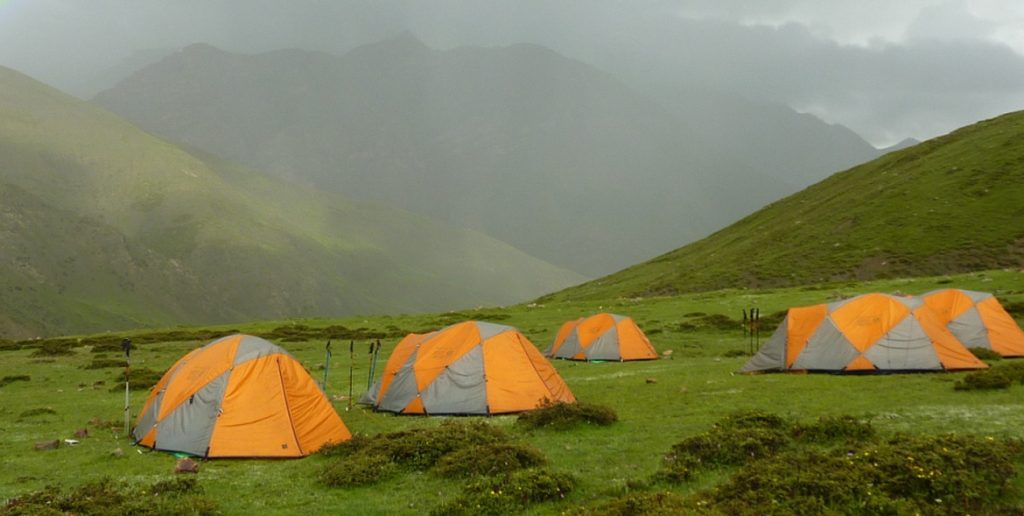
At the campsite we will provide you with a comfortable tent and sleeping mat, a toilet tent and dining tent. The chef will have his kitchen tent too. Hot water for washing is provided and we will try to make everything as comfortable as possible for you.
Food While Camping
Breakfast, lunch, afternoon snack and dinner are provided while camping.
While you are getting ready in the morning, breakfast will be prepared. Lunch will be taken on the trail (perhaps a packed lunch) and there will be snacks and tea waiting at the end of the day while dinner gets underway.
As there is no electricity at the campsites the cooking is done on a kerosene stove which the camping crew will bring with them.
If you can bring some snacks from home (or Kathmandu) it’s a good idea. The food that the chef prepares will be good and filling but it is always nice to have that little luxury now and again!
Possible Menu While Camping:
Breakfast may be porridge with bread (probably roti – a Nepali flat bread)
Lunch and dinner can be pasta, noodles, dal bhat (Nepali vegetable curry), pizza, etc.
Afternoon snack may consist of fried potatoes and popcorn.
We will not buy meat on the way but will bring some canned meat / tuna fish. There will always be vegetarian food available at every meal.
Tea/ coffee/ hot water is unlimited, with powdered milk and sugar for the tea/coffee.
We will not carry alcohol as we do not recommend its consumption at altitude. Also it’s just too heavy to carry anyway, as is soft drinks. So no soft drinks either.
Drinking Water While Camping
The kitchen tent will provide you with boiled water for drinking. If you come across a mountain spring, as long as you add purifying drops or tablets to it you can drink that water. When in doubt as the guide. A LifeStraw is probably the best idea as it filters out some, not all, larger bacteria.
What You Need to Bring for a Camping Trek
Take a look at our list of trekking equipment / gear you need on any trek. We suggest a few additional items for a camping trek, such as:
- Clothing for the cold at high altitudes.
- Portable solar panel (one which hooks onto your day pack) to recharge equipment.
- Your favorite snacks.
- Headtorch with batteries and extra batteries.
- Medicines – any ones you take regularly plus items such as headache tablets, stomach tablets etc. And a small first aid kit.
- Four-season sleeping bag. This can be rented in Kathmandu.
- Toiletries in small, travel sized containers, and some clothes washing soap.
- Things for blisters and a few bandages in case of sprains.
- Nepali rupees in case there is something you wish to buy on the trek. There will be limited places to spend money on this trek but there will be some teahouse overnight stays when you might want a beer or soft drink etc. And you need money for donations at monasteries. There are a lot of monasteries!
Porters will be carrying the tents, kitchen equipment and food you will be using on the camping portion of this trek. It is therefore possible for them to also carry your gear. Please be considerate and keep your gear down to a sensible weight of essentials!
In a few of the settlements/ villages where there are teahouses (the name given to trekking lodges in Nepal) we chose to use them.
Accommodation will be simple in these teahouses. And toilets / showers are likely to be outside the main building and shared with others.
The food in the teahouses is standard Nepali, Chinese, Tibetan fare with some Western items such as pasta, eggs, toast etc. In the teahouses you will get breakfast and dinner. Lunch will be taken as usual on the trail.
Teahouses in some areas will have WiFi access, hot water showers and charging points. You will be expected to pay for these services.
For Upper Dolpo, you can come in the ‘usual’ best times of spring and autumn but as Dolpo lies in the rain shadow, you can also come here during the monsoon season.
- Spring is from March to May.
- Monsoon is from June to the beginning of September.
- Autumn is from September to November.
Do keep in mind it will get very cold towards the end of autumn and at the beginning of spring, in fact, November might be getting difficult due to snowfall.
It is not possible to trek in this region during the winter months.
Trekking in the Rain Shadow
Monsoon takes place in Nepal around the end of June until the beginning or middle of September. Except for those areas in the rain shadow like Dolpo and Upper Mustang, most of the trekking routes are difficult or impossible to access during monsoon.
In rain shadow areas the area in question is shielded from the monsoon rains. In Dolpo it means the Himalayas block the monsoon winds that bring rain. With Dolpo on the windward side of the Himalayas, the wind brings dust and sand, not rain.
Do remember, however, that during the monsoon flights may be impacted by the monsoon weather.
Your First Days in Nepal
If you wish, we can meet you at the Tribhuvan International Airport on your arrival, saving you time and effort. Just let us know on the booking form but please note there is a charge for pick up.
Hotels in Kathmandu
Included in your trek are camping and teahouse stays. And also one night in a hotel in Nepalgunj.
Booking.com and hostelworld.com will give you a selection of hotels in Kathmandu. We suggest you stay in Thamel which is geared up for tourists with lively cafes, restaurants, bars and shops.
There is so much to see in Kathmandu that we recommend you take a tour. You can book this with us, or go alone. Highlights include Boudhanath (Tibetan area), Swayambhunath (also a Buddhist stupa) and Pashupatinath (Hindu temples and ghats). There are three Durbar Squares within the Kathmandu Valley, dating back to when there were three kingdoms in what is now Kathmandu, Patan and Bhaktapur. These are among the 7 UNESCO World Heritage Sites and there is so much more.
Our office is also in Thamel.
Visa on arrival is available for people from most countries, via the Immigration Department of Nepal’s on-line site. Complete the form, print it out and bring it with you. Bring USD cash (exact money) to make payment on arrival at the airport.
Visa on arrival is valid for 15 days, 30 days or 3 months and costs:
- 15 Days – 30 USD
- 30 Days – 50 USD
- 90 Days – 125 USD
For the Upper Dolpo Circuit Trek you need the following permits.
- Restricted Area Permit (RAP) for Upper Dolpo: – USD500 per person for 10 days. USD50 per person per day for any additional days.
- Restricted Area Permit (RAP) for Lower Dolpo: USD20 per person for one week, US5 per day for an additional days.
- Shey Phoksundo National Park Permit: USD30 per person for the duration of your trek.
We shall organize these permits for you.
Why You Need These Permits
The fees from these permits go back into conservation and cultural preservation of the area. It is also a way to keep track as to where trekkers are in the area – every time you go through a checkpoint it is noted down. Invaluable should you get lost between checkpoints.
One of the main concerns for this high altitude trek is altitude related illness. You will be sleeping at over 3,000m / 9842.5 ft for around two weeks. On this trek it is not really possible to ‘sleep lower’ should you start to feel unwell. Again, this is one reason we stress that to undertake this trek you should have prior high altitude trekking experience.
You can, however, take steps to mitigate the effects of altitude by being sensible and following a few guidelines such as drinking enough water to stay well hydrated, going slowly and taking lots of breaks. Our guides are trained in first aid and in recognizing signs of altitude so do not hesitate to inform them if you are feeling unwell.
As experienced trekkers you know the risks of heading off into uncharted places alone!. Please let the guide know if you are wishing to go explore on your own at any time. Always be aware of your surroundings in the mountains.
Tips for Safety on the Trek:
We know as experienced trekkers you know these tips, but here is just a reminder.
- Trekking poles for stabilizing yourself on risky trails.
- Do not go off on your own at the rest/ overnight stops. without telling your guide.
- Drink at least 4ltrs of water per day. While camping you will be provided with boiled drinking water.
- It is important not to skip meals. In case you do not feel up to eating, let your guide know and he will try to arrange something ‘light’ for you that day.
- Do tell your guide if you feel unwell; even slightly unwell.
- Have the correct insurance.
- Wear the correct gear. Bring waterproof gear in case of rain or snowfall even when it’s not forecast.
- Bring your own regular medicines and a medical kit.
- Pay attention to the guide in tricky or dangerous areas.
Since this is mainly a camping trek there really aren’t many places to spend your money!
The cost of the trek, namely, food, accommodation, guide and porters has already been covered. On the few nights you stay in a teahouse we have you covered for food also. If you wish any ‘add-ons’ while in a teahouse such as cold drinks, beer, extra snacks, even a hot shower or use of their WiFi (if they have it), you will need some Nepali rupees for that.
You should also think about donations for the monasteries (gompas) you visit. It is normal, and yes, locals will do the same, to give a donation. Around Ns150-500 for each gompa is good. A little more if you are lighting a butter lamp provided by them.
There is not likely to be any opportunity to buy souvenirs on this trek – but you never know your luck! You might want to have money to spend in Nepalganj although your time is quite short there.
We can suggest you calculate how many days you are staying in a teahouse, and bring around USD10-15 per day for those days, and perhaps bring around USD5-10 for the other days – just in case!
What is Included and Not Included in the Cost of Your Trek
Transport: Four domestic flights are included in the cost.
Accommodation: Tented accommodation is included where indicated. Teahouse accommodation is included where indicated. Hotel in Nepalgunj for one night is included.
Food: When camping you will get breakfast, lunch, dinner, and afternoon snacks. When staying in a teahouse you will get dinner and breakfast in the teahouse and lunch will either be a packed lunch or from a smaller establishment on the trail. In the hotel in Nepalgunj you will get dinner and breakfast.
Permits: The permits required for this trek are included in the cost of your trip.
Tips: Tips are not included in the cost of your trek. Please calculate the tips for your guide and porters. Tips can be in Nepali rupees or other currencies.
Before you come expenses: .
- Trekking / camping gear, good trekking boots.
- Flight ticket, visa fee, and insurance.
It is the norm to tip your guide and porters on treks. In this particular case, the terrain is particularly tough for porters carrying camping equipment and food. Your appreciation of these amazing men can be shown through the tips you give them at the end of your trek. Your guide is also working hard to keep you safe, supported, and entertained with information about the landscapes, people, mountains etc. Do not forget your camp chef without whom no one is getting up and over those high mountains!
Please be aware, 100% of your tips go to the staff.
We suggest the following:
- Tip the guide 10% of your trip cost.
- For the porters it is normal to tip around a total of USD150 for each porter and a total of USD200 for the chef.
- The tips for the guide and crew members are divided by the number of trekkers on a trip So, the larger your group, the less you pay as an individual!
Bardia National Park
At the end of this trek you will be back in Nepalgunj in the West Terai region of the country. From there you will take a 50 minutes flight back to Kathmandu.
If you wish to extend your trip while in the west of the country, we can recommend Bardia National Park. This is a place for wildlife safaris, much like Chitwan National Park but much more rural and underdeveloped.
Bardia (or Bardiya) was established as a wildlife reserve in 1976 and was given national park status in 1988. Being the biggest lowland national park in Nepal at 968 square km, Bardia is home to a wide range of wildlife and flora. The area is sub-tropical so the forests are lush and the grasslands rich with mammals and birdlife.
There are 61 species of mammals and 513 species of birds in the park. Most interestingly there is a large community (the largest in Nepal) of Royal Bengal Tigers, wild elephants (who are migratory) and Gangetic dolphins. One Horned Asian Rhinos are not native to this area, but have been located from Chitwan National Park due to their success in Chitwan where the population is high.
There are a number of hotels and homestays around Bardia National Park and within the buffer zone area, offering a range of facilities. All hotels offer walking and jeep safaris into the park.
The park lies approximately 80 km / 50 miles from Nepalgunj and takes around two hours by private vehicle to reach. Most visitors spend 3 nights / 4 days there due to its distance from Kathmandu, although you are welcome to spend less or more time!
Should you be interested in visiting the park, please ask us about this.
**We can also assist you with other trips or treks around the country and in Bhutan and Tibet. Ask us!**
Diversity – Equality – Inclusion: Keys to a Great Experience
We at Magical Nepal are a team of highly trained travel enthusiasts.
We started Magical Nepal in 2017 and pride ourselves in growing a great team. From our climbing guides, trek guides, and liaison staff to our camp staff, porters and camp chef, we all love to explore and travel in the Nepal Himalayas. We also love to introduce our beautiful country to our clients.
We are committed to human dignity, security, and safety for all – for our clients and for the communities we visit. We are also committed to the environmental sustainability of the landscapes, flora, and fauna of the Himalayas.
We also pride ourselves on offering great value for money and a price guarantee – if you can find the same trek at a lower price, we will match it – guaranteed.
Please check the reviews from our past clients to see what they say about us.
Want to read later?
Download the PDF and read it later.