Everest Base Camp Trek
| Starts at: Lukla | Ends at: Lukla |
| Trek Region: Everest | Transport: Flight |
| Duration: 14 days | Trip Grade: Strenuous |
| Max Altitude: 5,545 m/ 18,192 ft | Accommodation: Teahouse |
In an ideal world, most of us would love to stand on the top of the world, 8,848m high on Mt Everest.
Realistically, most of us will not be able to achieve this! But if you have good fitness and strong determination, you can make it to Everest Base Camp!
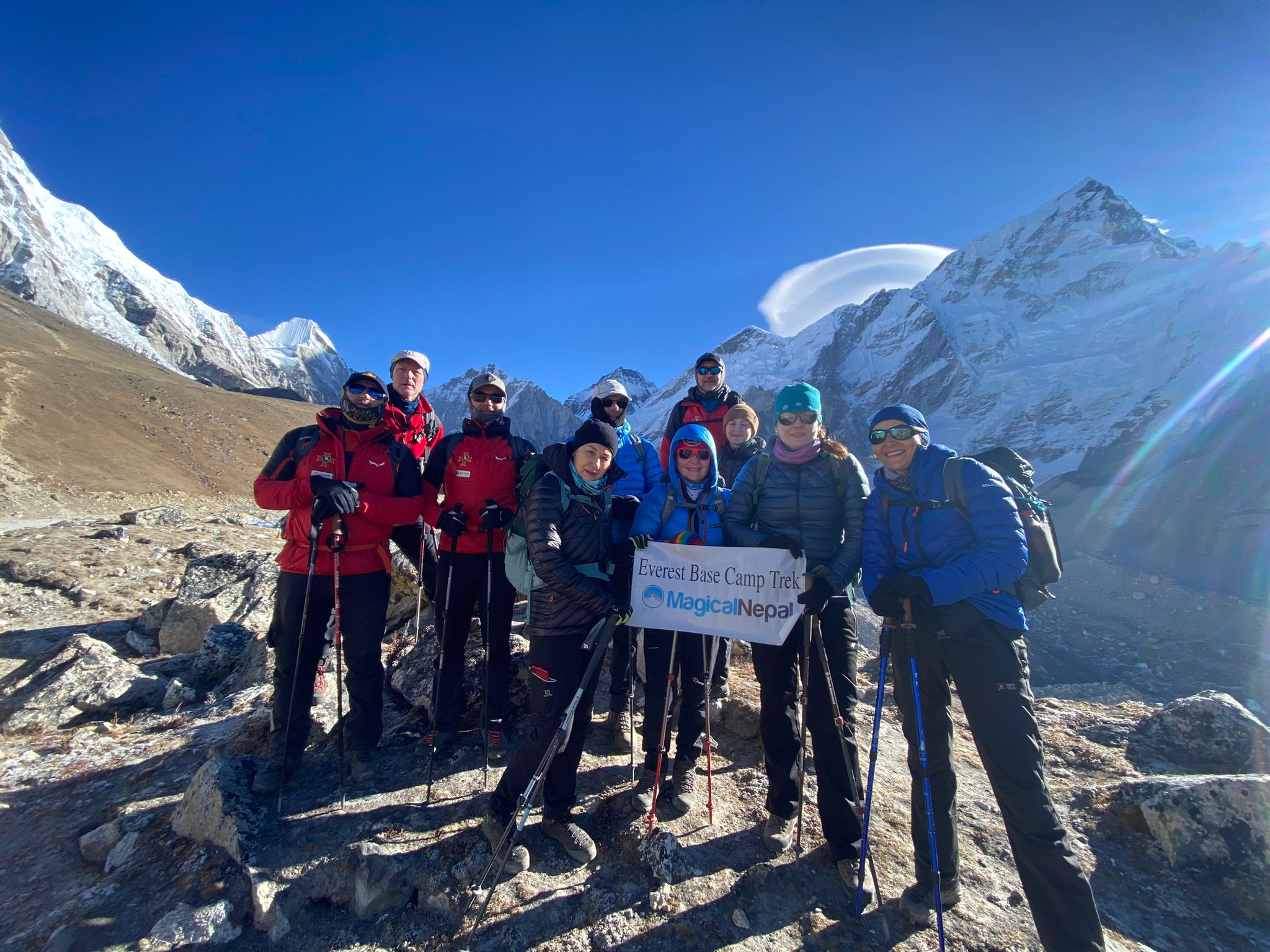
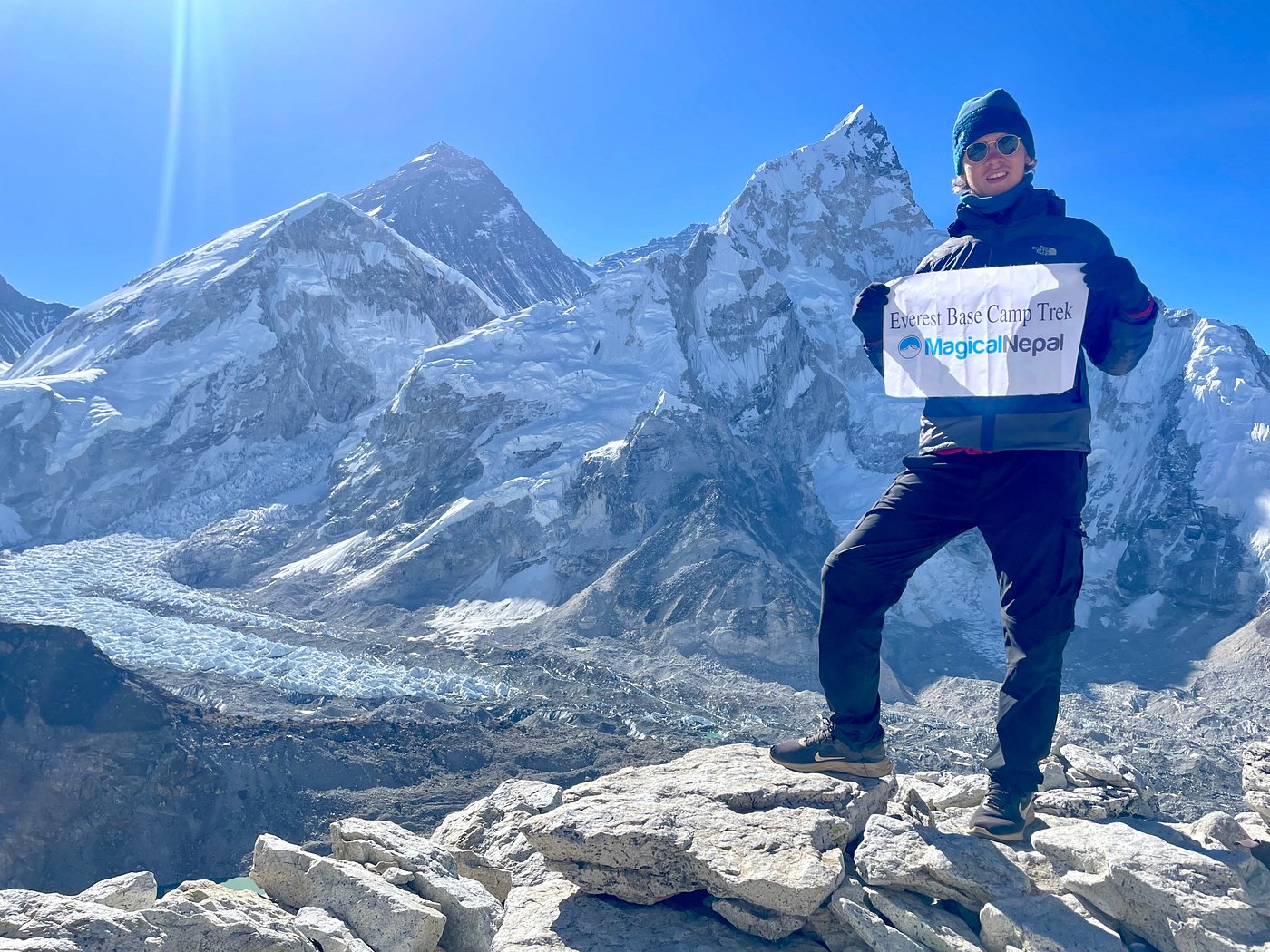
And between you and me, the views of Everest from Kalapatthar are the most spectacular you can get without having to spend weeks trudging up to the summit!
Hopefully, you have gone through our sections about the Everest Base Camp Trek and have gathered all the information you need to help you decide when you would like to do this trek, what to bring with you on the EBC trek, and some of the highlights of the trek itself. We believe this is one of the best trekking routes in the world!
Everest Base Camp Trek Highlight
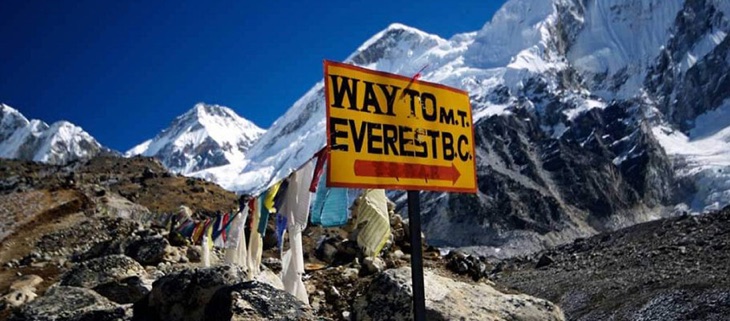
- Stand at the base of Mt Everest in awe of its majesty and size
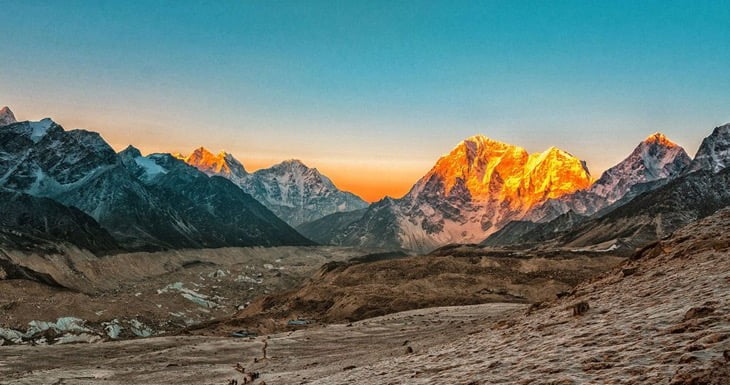
- Witness the sun setting over Everest from Kalapatthar, known as the Everest viewpoint
- Fly into the high-altitude Hilary Tenzing Airport at Lukla, an experience in itself
- Visit Sherpa villages with their Tibetan-like peoples and yak herders
- Stay in Namche Bazaar, the starting point for all Everest expeditions
- Be stunned by the chilling beauty of the Khumbu Glacier and Khumbu Icefalls
- Use the essential acclimatization days to learn something about the lifestyle of the Sherpas
- Pass through Sagarmatha National Park with its unique flora and fauna
- Follow the footsteps of Sir Edmund Hillary and many other famous mountaineers
- Visit Tengboche Monastery with its strong spiritual connection
This is not a luxury tour; this is an experience of a lifetime!
Accommodation is on a twin-share basis. Hot showers, wifi, and power sources are provided, with a small charge. The rooms might not be luxurious, but where else can you get views of the Himalayas mountains from your window?
Enjoy fresh Himalayan foods in teahouses along the trail. Where else can you be part of such beauty that is the Khumbu Valley while enjoying steaming hot DalBhat?
A good level of fitness is required. But we will ensure you are well-acclimatized to the altitude. We suggest you keep well hydrated on the trek, keeping alcohol to a minimum.
If you don’t want to trek but wish to see Everest, check out Everest Base Camp Helicopter Tour.
Permits for Everest Base Camp Trek
The Government of Nepal imposes permit entrance fees to preserve the beauty surrounding Mt. Everest and other mountains in the Himalayan range.
All national parks in Nepal need a permit, and the Sagarmatha National Park is no different. When you compare the cost of the permits to the overall cost of your trip to Nepal and the Everest Region, the amount is relatively small. It is an investment in the future of this beautiful area with its snow, forests, ice, pastures, and culture.
Sir Edmund Hillary and Tenzing Norgay may have been the people to put the Khumbu on the map, but since then, countless mountaineers and trekkers have enjoyed the beauty of the likes of Mt. Everest, Ama Dablam, Goyko Lakes, and much more. Let’s ensure this area stays as it is for future trekkers and Nepali people.
For the Everest Base Camp (EBC) Trek, you need entrance permits as explained below:-
- Khumbu Pasang Lhamu Rural Municipality Entrance Permit (NPR 2000 Per Person)
- Sagarmatha National Park Entry Permit (NPR 3000 Per Person)
Click here to learn more about Everest base camp trek permits
Magical Nepal issues the required permits for its clients
A Typical Day on the EBC Trek
While the scenery and mountain views may change daily, some things do not. For example, each day on the trek starts and ends similarly:-
We start our day early, at around 6 or 7 am when we all meet for breakfast in the teahouse (lodge) dining room. Breakfast is ordered the night before so the teahouse owner can have it ready for us on time. After breakfast, prepare your duffel bag, which the porter will carry. He will set off at his own pace. All you need to carry is a day pack with what you think you might require for the day, such as a water bottle, sunscreen, snacks, etc.
Then start hiking with your guide. The way will be familiar because your guide will have explained the day’s highlights the night before. You will continue walking until the lunch stop on the trail. This will most likely be at a small settlement. After lunch, follow the trail until the overnight teahouse.
At the teahouse, it’s time to choose the items off the menu for dinner before relaxing with other travelers or writing your diary. The guide will explain the route and landscape for the next day during or after dinner. Don’t forget to order breakfast before heading off to bed.
Important Notes for EBC Trek
- Flights to the Everest Region now depart from Ramchhap airport due to congestion at the Kathmandu airport. Ramchhap is a several hours drive from Kathmandu, so we leave Kathmandu at 1 am to reach there for the early morning flights. There are no day or evening flights due to the high winds in the mountains in the afternoons.
- Flights can be delayed or canceled due to bad weather. We recommend you build in a 2 or 3-night contingency plan. That means do not book your international flight for Tuesday if your planned flight from Lukla is on Monday. Best to book it on Thursday or Friday.
- If you wish to take a helicopter flight from Kathmandu to Lukla, there will be an additional charge of around $250 to $300.
- There is no additional fee for the package rate for solo travelers. However, if you are traveling alone and wish for a single room, please add on the single supplement during checkout.
- Porters can only carry 20kg. So please pack lightly. We will provide you with a bag/duffle bag that is easy for porters to carry.
- Airlines have a weight limit of 15kg per person. Any excess can be paid at the airline counter at the airport. Note that this is only possible if the flight is not overweight already. Again, please pack lightly.
- Please provide us with a copy of your passport at the booking stage, as we require this for domestic flight booking.
- Meals on the trek are included in the price. This does not include hot or cold drinks, alcohol, or extra snacks. In Kathmandu, breakfast is included, but not lunch or dinner.
- There are extra expenses for hot showers ($3 to $5) and charging your battery ($1 to $3).
- You can buy a wifi card in Lukla or Namche Bazaar at http://everestlink.com.np/ for $25. 10 or 20 GB of data are provided for use over 30 days in the Everest Region. We cannot guarantee the wifi quality – it will depend on the weather and location.
- Weather can change dramatically and quickly in the mountains, so please bear with us if there are delays. Please follow the advice of your guide if he needs to change the itinerary in any way due to the weather.
- Drones are not permitted unless you have a special permit to fly them in the Everest Region. This is because there are many unscheduled helicopter flights in the sky. It is tricky to obtain permission, so leave it at home unless you need a drone.
- Remember your insurance!
- Most of all – enjoy your amazing adventure!
Everest Base Camp Trek Itinerary
Day 1: Welcome to Kathmandu!
Kathmandu – 1,300 m / 4,265 ft
Day 2: Kathmandu to Lukla (Flight) to Phakding
Phakding – 2,651 m / 8,697 ft – 4 hrs
Day 3: Phakding to Namche
Namche – 3,440 m / 11,286 ft – 5 to 6 hrs
Day 4: Acclimatization Day in Namche
Namche – 3,700 m / 12,139 ft – 4 to 5 hrs
Day 5: Namche to Tengboche
Tengboche – 3,956 m / 12,979 ft – 5 to 6 hrs
Day 6: Tengboche to Dingboche
Dingboche – 4,380 m / 14,370 ft – 4 to 5 hrs
Day 7: Acclimatization Day in Dingboche
Dingboche – 4,380 m / 14,370 ft – 3 to 4 hrs
Day 8: Dingboche to Lobuche
Lobuche – 4,938 m / 16,200 ft – 4 to 5 hrs
Day 9: Lobuche to Gorakshep (Afternoon hike to Kalapatthar)
Gorakshep – 5160 m / 16929 ft – 6 to 7 hrs
Day 10: Gorakshep to Pheriche (Morning hike to EBC)
Pheriche – 4,371 m / 14,340 ft – 8 to 9 hrs
Day 11: Pheriche to Namche
Namche – 3,440 m / 11,286 ft – 6 to 7 hrs
Day 12: Namche to Lukla
Lukla – 2,860 m / 9,383 ft -7 hr
Day 13: Lukla to Kathmandu (Flight)
Kathmandu – 30 min
Day 14: Departure
Departure
Day 1: Welcome to Kathmandu
- Accommodation: Hotel
On your arrival at Tribhuvan International Airport in Kathmandu, you will be met by our representative and transferred to your hotel.
Your hotel is in the city’s center, the vibrant and colorful area known as Thamel. With its restaurants, bars, and shops with unique Nepali handcrafted items and trekking gear, this is an interesting place to spend the afternoon.
There will be the opportunity to meet your guide today and ask any questions you may still have about your trip to Everest Base Camp.
Day 2: Kathmandu to Lukla (Flight) to Phakding
- Flight time: 35 to 40 minutes
- Trek time: 3 to 4 hours
- Accommodation: Tea House
- Trek Distance: 6.2 km/3.8 miles
Due to changes in the regulations and upgrading at the domestic airport in Kathmandu, flights to Lukla will likely operate out of Manthali Airport in Ramechhap District.
This involves a four-hour drive from Kathmandu during the night. The flight from Manthali will depart early in the morning and take 20 minutes.
On arrival in Lukla, our experienced local porters will meet you. Heading down the trail to Phakding, we already notice the fluttering Tibetan prayer flags and meet local people reciting Tibetan mantras as they walk.
Day 3: Phakding to Namche
- Trek time: 5 to 6 hours
- Accommodation: Tea House
- Trek Distance: 7.4 km/4.6 miles
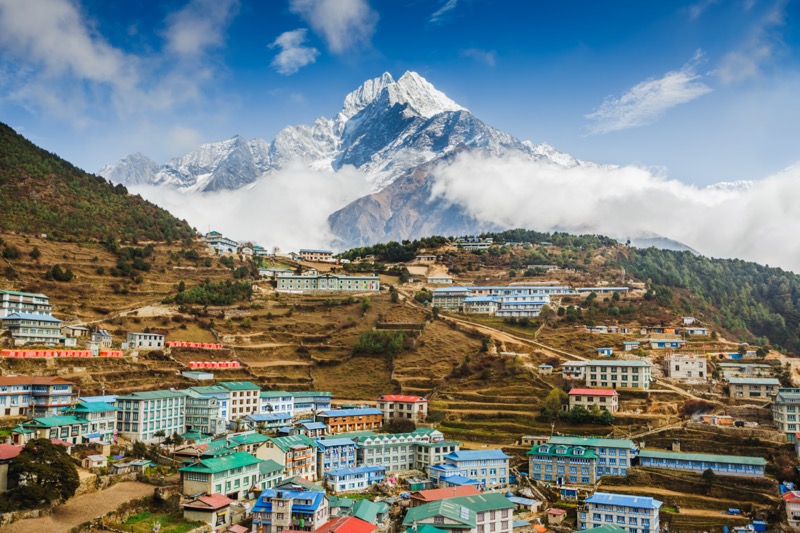
Today the trail takes us through forests, traditional villages with plowed fields, and yak pastures. As we reach the entrance to the Sagarmatha National Park, we can see Thamserku rising above us.
After lunch, we continue on to Namche Bazaar. This is the largest Sherpa village in the Khumbu Region and is the starting point for expeditions and trekking groups.
Here you can purchase a few last-minute items (such as chocolate) should you have forgotten to do so in Kathmandu.
Day 4: Acclimatization Day in Namche Bazar
- Trek time: 5 to 6 hours
- Accommodation: Tea House
Today is an acclimatization day to allow our bodies to adjust to the high altitude. But that doesn’t mean we do anything! The best way to acclimatize is to be active.
There is an opportunity to spend a few hours hiking around the area or visit the school set by Sir Edmund Hillary in the Khumjung village as a thank you for all the assistance the Sherpa people gave him in his successful ascent of Mt Everest.
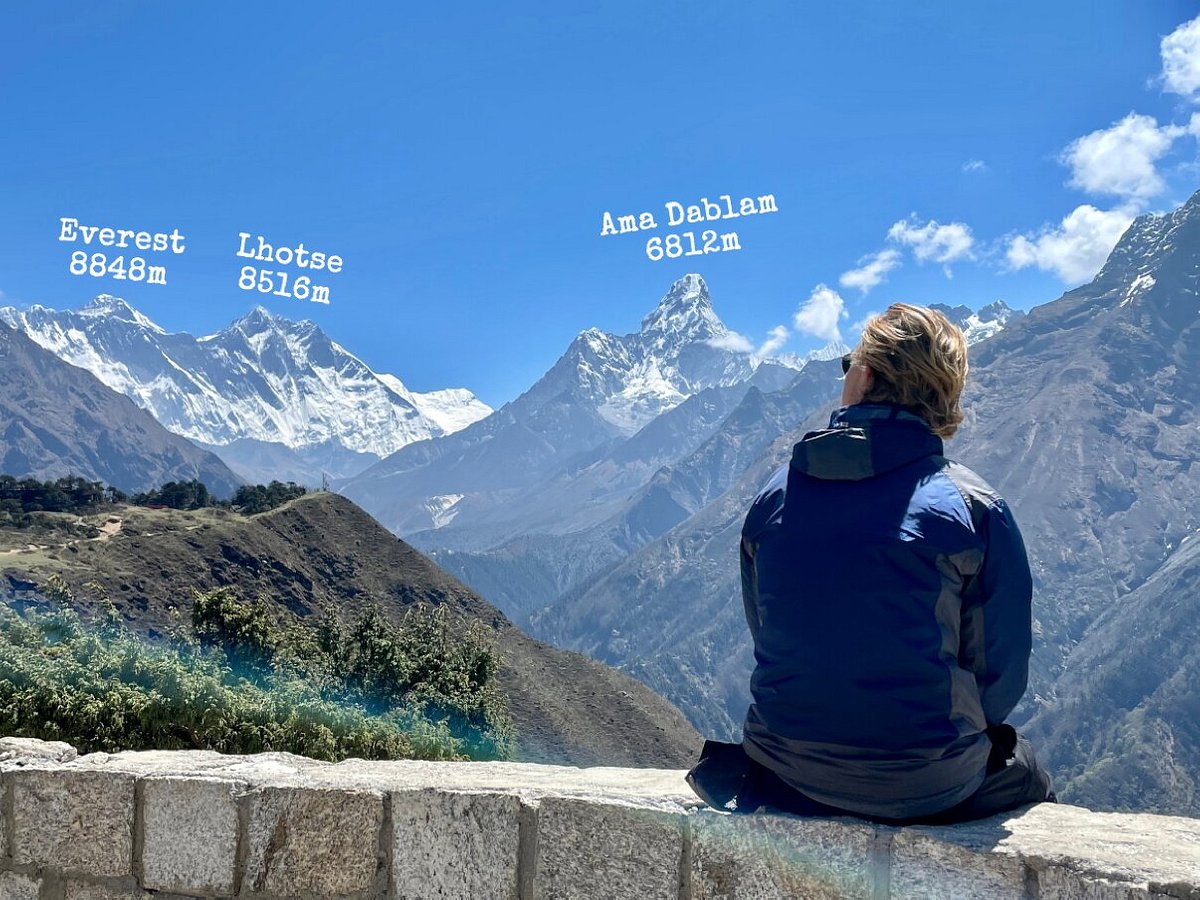
Some of the mountains on view today are Kwangde (6,011m), Thamserku (6,623m), Kangtega (6,782m), Nuptse (7,861m), Lhotse (8,516m), Ama Dablam (6,812m) and, of course, Mount Everest (8,848m).
Day 5: Namche to Tengboche
- Trek time: 5 to 6 hours
- Accommodation: Tea House
- Trek Distance: 9.2 km/5.7 miles
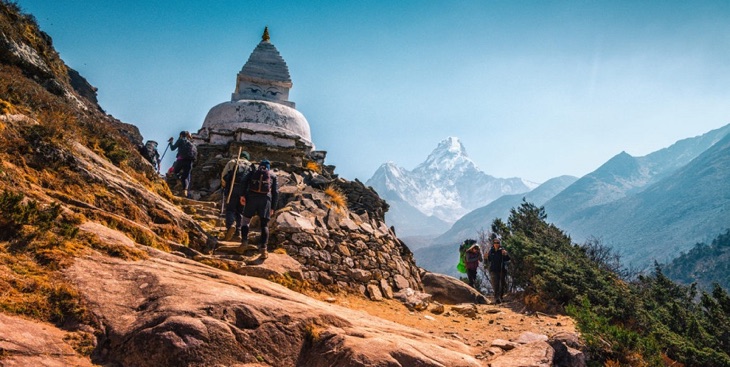
There are not many steep ascents and descents today, giving plenty of time to concentrate on photography! Stupas (Buddhist shrines), prayer flags, mani walls (walls with Buddhist prayers carved into them), and mountains, such as Ama Dablam, and Tengboche Monastery, are all worth photographing.
The trail up to Tengboche is a dusty switchback route, but the panoramic views from the monastery make it all worthwhile. If you are lucky, you can attend a service, for which a small donation would be appreciated. You can light some butter lamps.
Day 6: Tengboche to Dingboche
- Trek time: 4 to 5 hours
- Accommodation: Tea House
- Trek Distance: 12 km/7.45 miles
The trail is, of course, very scenic but also quite challenging today. We follow the Imja Khola before climbing up to Dingboche’s windswept fields (mainly potato).
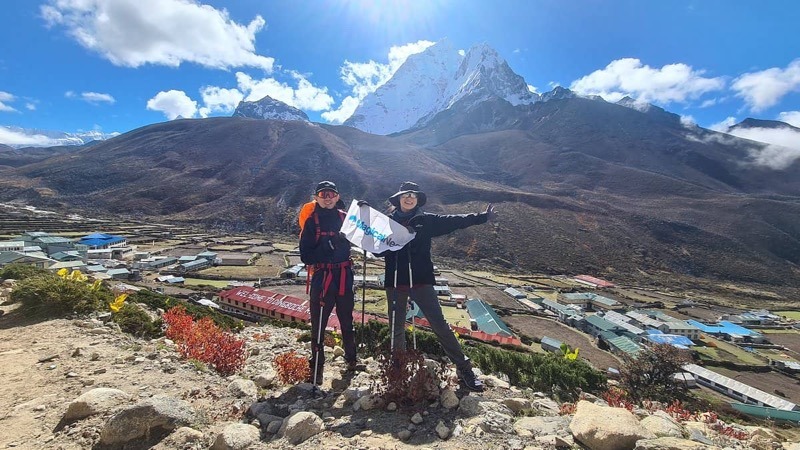
This is the highest Sherpa settlement in the Khumbu Region. Ama Dablam’s views from here are spectacular and dramatic as we will arrive at Dingboche in time for lunch. The rest of the afternoon is free to relax with a book or gaze at the surrounding mountains.
Day 7: Acclimatization Day in Dingboche
- Trek time: 4 to 5 hours
- Accommodation: Tea House
With the ever-rising altitude, it is important to take another day to acclimatize. There are several options available for short hikes today.
Such as visiting the base of Nangkar Tshang Peak, with its sacred sites and views of Mt Makalu. This trip is a 3.5 to 5 hours round trip, and the ascending altitude on this hike will help our bodies prepare for the high altitudes ahead.
Day 8: Dingboche to Lobuche
- Trek time: 4 to 5 hours
- Accommodation: Tea House
- Trek Distance: 8.5 km/5.2 miles
Today the trek begins with a gentle climb toward the Pheriche Valley. Trekking above the valley floor, we pass through alpine scrub and yak pastures. On display are Tawoch and Cholotse, with Ama Dablam behind us. From here, it appears Ama Dablam is rising directly from the valley floor.
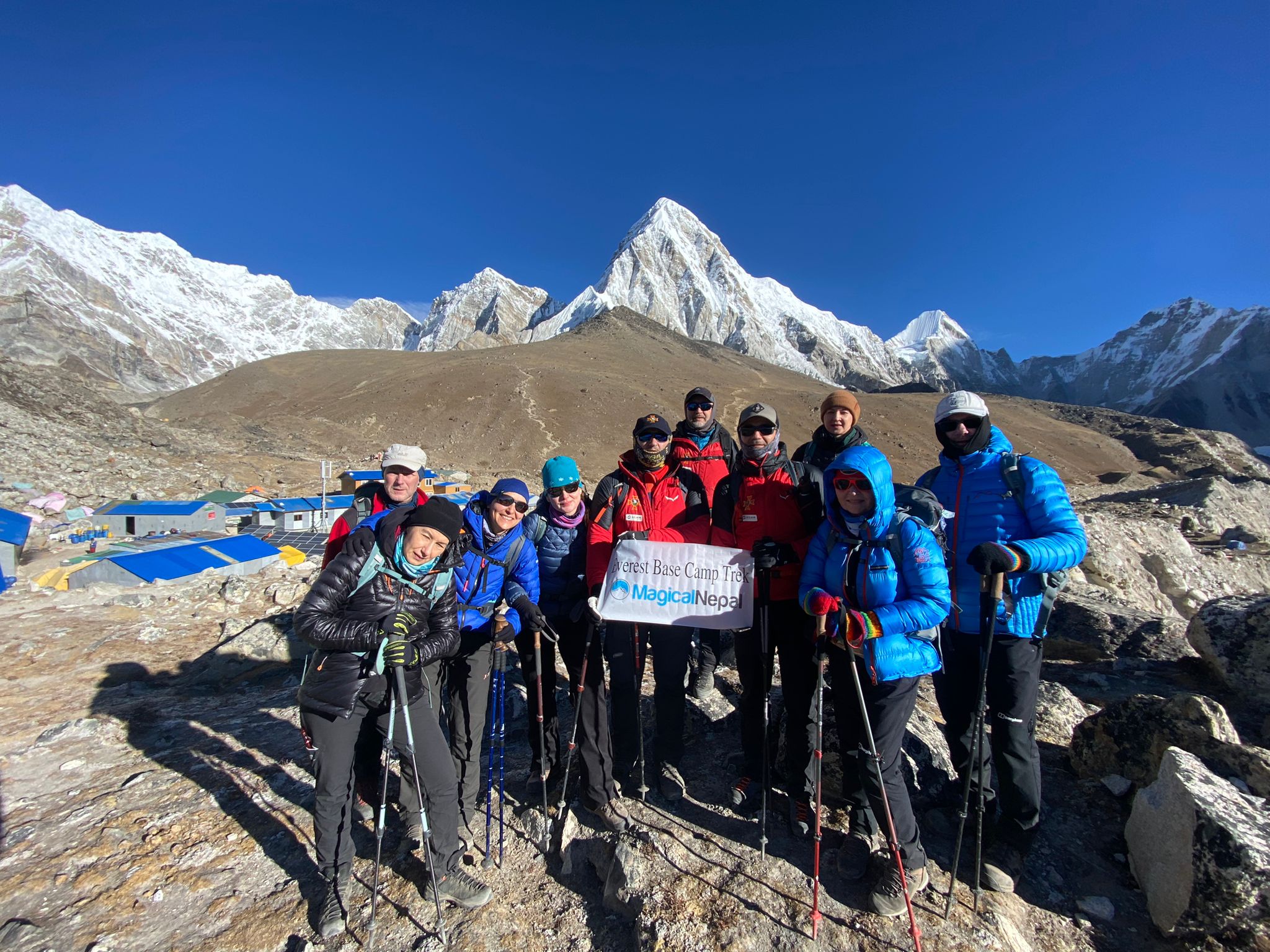
The trail continues on to Thokla Pass, where the ascent is challenging. Again a photographer’s paradise as there are panoramic views of Nuptse, Lhotse, Lhotse Shar, and a few other 7,000-plus meter peaks!
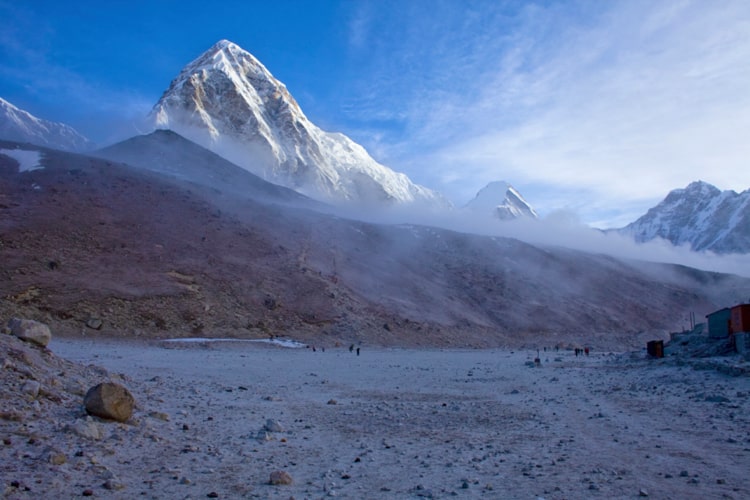
After crossing the pass, we reach Lobuche. Not a very attractive settlement in itself, but the scenery surrounding it is beautiful and dramatic.
Day 9: Lobuche to Gorakshep (Afternoon hike to Kalapatthar)
- Trek time: 6 to 7 hours
- Accommodation: Tea House
- Trek Distance: 15 km/9.3 miles
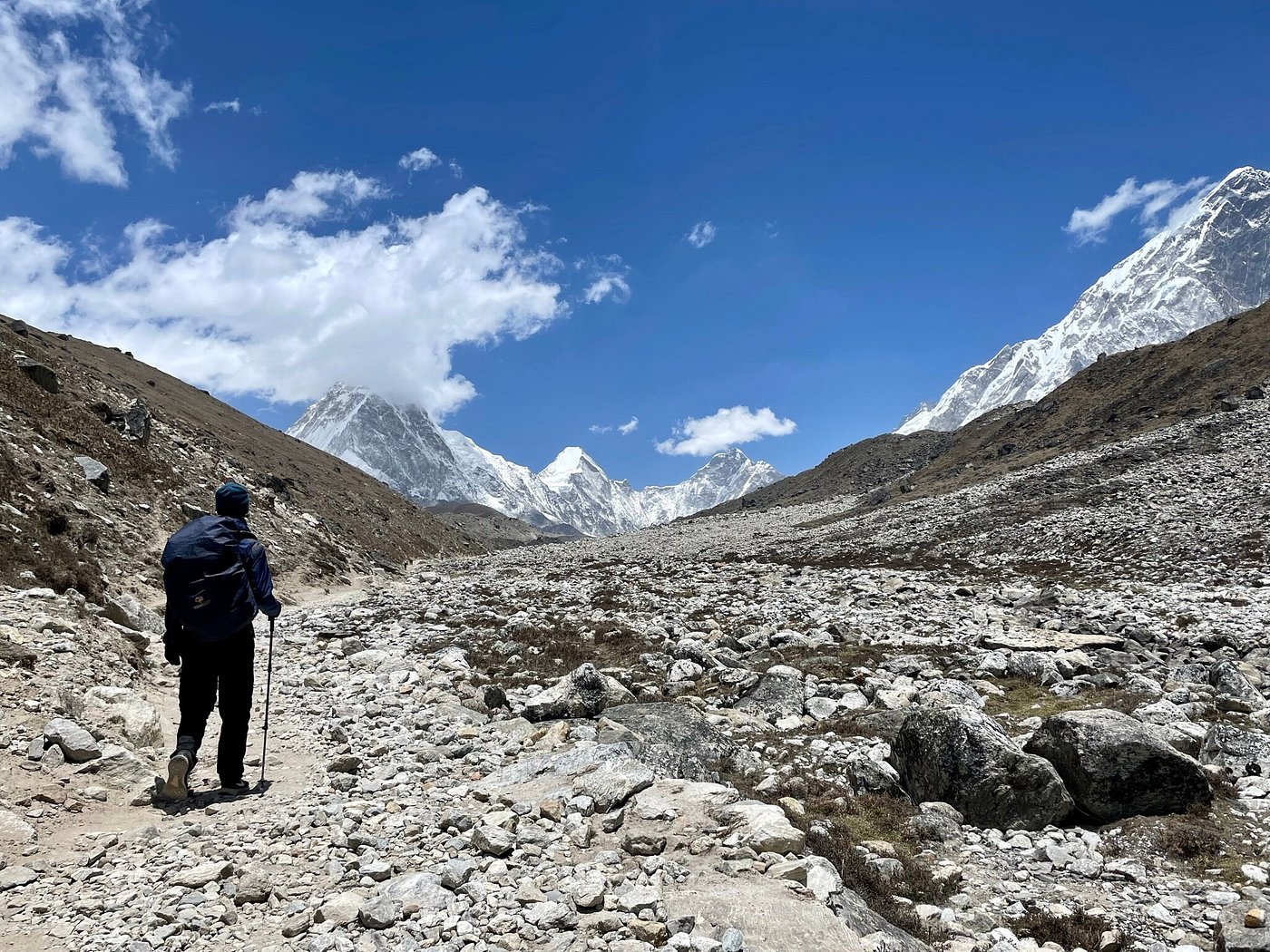
This is an exciting day! Today we ascent to the viewpoint for Everest. First, the trail takes us for about 3 hours over boulders and rough terrain to the small settlement of Gorakshep.
After lunch, it starts out for Kalapatthar, from where the views of Everest are simply the best views you can possibly get. At 5,545m, this is the highest altitude we can trek in Nepal without requiring climbing permits. Its name means black rock, which is more of a ridge than a mountain.
If the weather is not clear, we may leave Kalapatthar for the morning as sunrise over Everest is equally awe-inspiring as the sunset. Should we decide on this option, we will hike to Everest Base Camp today. Please be aware trekking groups do not go right into the base camp where expeditions are set up.
This is,, so we do not disturb the climbers’ activity or risk their health. (We don’t want to give them our colds and flu when they embark on such an epic journey!) But we get a good view of all the ongoing activity.
Day 10: Gorakshep to Pheriche (Morning Hike to EBC)
- Trek time: 7 to 8 Hours
- Accommodation: Tea House
- Trek Distance: 19.6 km/6 miles
If we didn’t make it to Kalapatthar yesterday, we would do it this morning, returning to Gorakshep for breakfast. Similarly, if we did not visit Everest Base Camp on day 9, we will do that this morning. Each trip takes 3 – 4 hours to return from Gorakshep.
After breakfast, we head to Pheriche, which takes approximately 4 hours. This little settlement houses the Himalayan Rescue Association Clinic.
Long established, it is now a hospital but still focuses on altitude sickness and altitude-related problems of trekkers and climbers as well as the health of the local people. Staffed mainly by volunteer medical personnel, this is an interesting area feature.
Day 11: Pheriche to Namche Bazaar
- Trek time: 6 to 7 hours
- Accommodation: Tea House
- Trek Distance: 16 km/9.9 miles
The trail descends quite considerably today, but some uphills must be tackled! As we approach Namche, the forests and greenery return.
This is a long day of walking, made harder by the hard hiking the day before. But push on because a good dinner and a hot shower await! And now is the opportunity to celebrate your successful trek to Everest Base Camp with a beer!
And with wifi available, now is also time to get in touch with loved ones at home and perhaps upload a few pictures of your trip.
Day 12: Namche to Lukla
- Trek time: 5 to 6 hours
- Accommodation: Tea House
- Trek Distance: 16 km/9.9 miles
In the earlier part of the day, take a good final look at the magnificent Himalayan mountains, and say goodbye to the Khumbu Valley and Mount Everest. Then put your head down as we make a final long ascent into Lukla.
Day 13: Lukla to Kathmandu (Flight)
- Flight time: 35 to 40 minutes
- Accommodation: Hotel
This morning says goodbye to Mt Everest and the Khumbu Region as we board our flight back to either Kathmandu or Manthali Airport. Depending on which airport is open at that time and, of course, weather conditions, either we will be back in Kathmandu for brunch or in the early afternoon. Then there is time to do some shopping before our farewell dinner in the evening.
Day 14: Departure
After breakfast, our representative will take you to Tribhuvan International Airport in time for your onward flight. Should you stay longer in Nepal or have a late flight, please note that the hotel check-out time is 11 am.
Not satisfied with this everest base camp Itinerary?
Are you interested on planning custom trip? It only takes 2 minutes.
Includes for EBC Trek
- Local transfers for your international flight x 2 (arrival/ departure)
- Local transfers for your domestic flights x 2
- Kathmandu Lukla Kathmandu flight
- Sagarmatha National Park Entry Park and Local Entry Permits
- Guide for 12 days
- Porter for 11 days
- 2 nights accommodation in a Kathmandu (Bodhi Boutique or similar)
- 11 nights accommodation in mountain teahouses
- Staff insurance and necessary ground transport for support staff
- 12 x set breakfast, 11 x set lunch and 11 x set dinner while on the trek
- Lunch and dinner in Kathmandu
- Personnel expenses of any kind and travel insurance
- Any Hot and Cold drinks
- Tips to the Guide and Porter (Expected)
Photos/Video

Equipment Checklist for Everest Base Camp
The following PDF gives you a general idea of the trekking equipment and clothing needed for the Everest Base Camp trek.
Everest Base Camp Trek FAQ
Is the Everest base camp trek worth it?
Yes! It is worth it to trek to Everest Base Camp. The views are spectacular, particularly in October and November. The base camp is busy with climbers during the expedition period from April to May. If you feel you can do this trek in the winter, there will be fewer other trekkers and climbers, and the views will be clear. However, it will be more challenging and cold!
Is the Everest base camp trek harder than Kilimanjaro?
The daily walking distance of EBC is longer than trekking Kilimanjaro. Elevation lost and gained each day is also more with more nights at high altitudes than in Kilimanjaro. However, summiting Kilimanjaro is harder than any part of the EBC Trek.
How much money do I need for the Everest base camp trek?
Our tour Package covers your accommodation and food. You may need money for a hot shower, wifi, battery charge, and drink We recommend you carry an additional USD 15 a day.
How cold is it at Everest base camp?
When you arrive at Lukla, you are already at 2800 m, so you will immediately feel the difference in the air temperature. Once you get to Dingboche (above Namche Bazaar), the temperature will drop. And continue dropping the higher you go. During the winter, the temperature can go down to -20 Celsius at night.
When is the best time to visit Everest base camp?
Since this is the most popular trek, the teahouses and lodges are open throughout the year, and people trek all months of the year. The best time in terms of weather and scenery is October, November, and April May.
How hard is it to walk to Everest base camp?
You do not require technical expertise or mountaineering skills to trek to Everest Base Camp. Be aware this is not a climb. It is a trek. There are also no high passes to cross. However, there is the altitude to consider, and you need to acclimatize properly, which will be done when you trek with an experienced guide. Suppose trekking solo does; take note of your health and go slowly.
How long should you train for the Everest base camp?
If you know you are planning to come to Nepal to do the Everest Base Camp Trek (or any trek), start preparing yourself physically. Aim to make walking the main part of the training by taking long and regular walks to keep fit.
What is it like at Everest base camp?
Prayer flags and stone piles mark Base Camp. During expedition time, you will see climbers’ tents in preparation for their push to the summit. There are no tea houses at the base camp. The nearest one is around 2.5 hours away at Gorak Shep. You will witness the Khumbu Icefall and glacier.
Where is the base camp for Mount Everest?
There are two base camps for Mount Everest. One is in Nepal, and the other is on the Tibet side near the Rongbuk Monastery. On the Nepal side, the base camp is at the base of Lho La Mountain, next to the Khumbu Icefall.
Has anyone died trekking to Everest base camp?
Although the Himalayan Database has an excellent record of deaths occurring during Everest expeditions, there are no official statistics on the Everest Base Camp Trek. Magical Nepal estimates around 3 or 4 people die annually on this trek, which is around 0/01% of the 35,000 treks on average to EBC each year.
How long does the Everest base camp trek take?
There are several answers! If you follow the regular, and most popular route, from Lukla to Lukla, it will take 12 days. If you want to explore more and go to Gokyo Lake or the Everest Three Passes, the number of days will vary from 14 to 16. If you decide to walk in from Jiri and then fly out from Lukla, it will take 18 to 20 days.
Is it dangerous to go to Everest base camp?
The altitude is the main ‘danger’ to trekking to Everest Base Camp. You will be spending three days at 5,000m elevation. However, going slowly and taking the recommended acclimatization days will reduce that danger considerably. Landslides are very rare, and there is no record of avalanches on this trek.
Can you trek to Everest base camp on your own?
Yes. You can trek to EBC by following other trekkers or groups. However, we never suggest trekking alone is a good idea. If you are taking any side routes crossing passes, please consider hiring a local porter if you do not want a guide. This is for your safety. And the safety of others who might have to come to your aid if you encounter difficulties.
Is there WIFI at the Everest base camp?
Yes! There is WIFI at Everest Base camp and more than 200 hot spots along the route, thanks to Everest Link company.
Is there cell service on Mount Everest?
There has been 4G connectivity since 2010 in the Everest Region. However, it does not work everywhere. You will not receive service in some Gokyo and the Thame Valley parts.
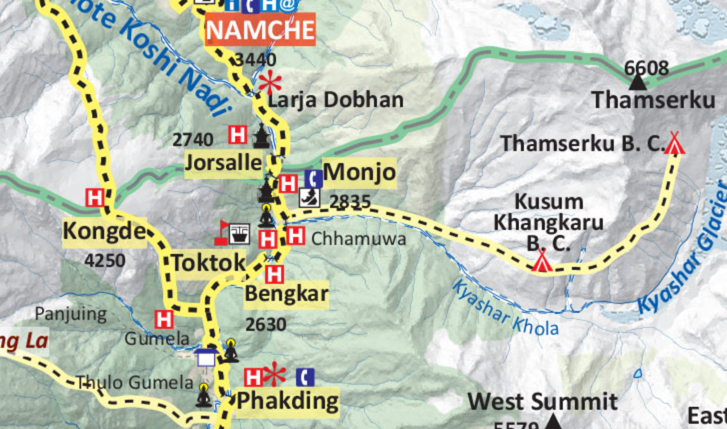
Everest Base Camp Trek Map
When is the best time to go to Everest Base Camp?
The generic answer to this question is ‘spring and autumn, but of course, It is not guaranteed that the weather is in such a uniquely high location. While we see trekkers and climbers coming year-round, there are definite times when the weather is more suitable for the average trekker.
Everest Base Camp in Spring (March to May)
Spring is a busy time on this trek as the sky and mountain views are clear. Plus, the temperatures are the best at this altitude – up to 20 degrees centigrade in the day and around 5 degrees at night.
Everest Base Camp in Monsoon (June to August)
Monsoon is when many folks in the west take annual leave, but this is not the best time to visit the Khumbu (Everest) Region. Incessant rain can make the hardiest trekker miserable and the trails more slippery. Flights into Lukla are frequently canceled due to the weather; you should build that into your plans. On the plus side, the trails and guest houses are less busy, and it feels like a blessing when the sun is out.
Everest Base Camp in Autumn (September to November)
Autumn is the second most popular time to come to the Everest Region, and the views are also stunning. On the downside, lodges can be busy and colder on nights. There is a possibility of snowfall, which can be a glass-half-empty, glass-half-full situation – either you love the added enchantment snow brings or dislike having to wrap up warmly. As a bonus, this is festival time in Nepal, and your guides and locals will be in a celebratory mood, making your trip even more memorable.
Everest Base Camp in winter (December to February)
Winter is definitely for the more experienced trekker. The weather is unpredictable, and trails can change in hours due to snow. The sky will most likely be clear, and the scenery changes daily as snow drifts in. On the positive side, fewer trekkers will be on the trail and lodges. But if this is for you, let’s discuss the possibilities as lodges often close for the winter as locals go down to lower altitudes to wait out the cold.
What is the Food Like on the Everest Base Camp Trek?
There are plenty of good, multi-cuisine options on this trek, from pizza to chowmein and porridge to omelets. However, above 3,000m (basically above Namche Bazaar), we recommend you not to eat meat because, normally, teahouses do not have refrigerators. You will eat at the tea house you are staying.
They do, though’ have a great selection of vegetarian meals. In the larger towns, such as Namche and Lukla, there are more options available – even bakery items fresh from the baker’s oven and a pub.
You can expect eggs, toast or Tibetan-style bread, porridge, or noodles for breakfast.
The local dish of dal bhat is preferred by the guide and porters. Dal bhat consists of vegetable curry, lentil (dal) soup, and rice. Very filling and a staple throughout Nepal.
The dinner menu at your overnight teahouse can vary, particularly at lower altitudes. There will be soups of different kinds, noodles and pasta in different forms, fried potatoes, fried rice, pizza (of different qualities), more dal bhat, and for dessert, perhaps custard or rice pudding.
At each stop, there will be soft drinks and tea, and coffee
Bakeries serve bread and cakes in larger settlements such as Namche and Lukla.
Breakfast at your overnight teahouse in EBC Trek:
- Spicy Nepali omelet with chili, onion, and tomatoes or piping hot porridge with milk
- Toast with jam or honey
- Nepali spiced tea or coffee (most likely instant coffee outside the bigger settlements).
Lunch on EBC Trek:
- Dal bhat (rice, curry, lentils) or noodles when available
- Nepali tea or a soft drink (where available)
- Chowmin
- Pasta
Dinner at your overnight teahouse in EBC Trek:
- Garlic soup
- Tibetan bread
- Fried macaroni with vegetables
- Custard
- Beer/ spirits (we recommend you limit your consumption at altitude)Tea/ coffee
Acclimatizing During the EBC Trek
As soon as you arrive at the airport at Lukla, you are at an altitude of 2,860m – having left Kathmandu at 1,440m an hour earlier. By the time you reach Namche, you have reached 3,440m above sea level. At this height, some may begin to see their bodies react to the altitude. Our guides are well-trained in the signs of altitude sickness and what to do should any trekker suffer. Our trek leaders and guides will also carry an oximeter to monitor your oxygen level should there be any questions. But avoidance is better than cure, so keep well hydrated and alert the guide to any changes in your body.
To avoid problems, we have an acclimatization day at Namche Bazaar and another at Dingboche.
Acclimatization days don’t mean you are doing nothing. It means walking around at a higher altitude and sleeping at a lower altitude to accustom your body to the height. On our EBC trek, we have built-in interesting things to do and see on these two days.
Altitude Variation in EBC Trek and What Magical Nepal Does to Minimize Altitude Sickness
You enter the Everest Region at Lukla airport at 2,860m/ 9,383ft. On that arrival day, you hike for four hours to the first overnight stop at Phakding, which is at 2,651m/ 8,697ft. As you can see, you are already at quite some height.
Therefore, there are two acclimatization days to minimize the chances of altitude-related problems. The first is at Namche Bazaar at 3,700m/ 12,139ft, and the second is at Dingboche at 3,956m/ 12,979ft. This way, your body gets used to the high altitude and the stress it is under.
Of course, nothing is guaranteed, so if there are any problems, Magical Nepal’s guides are trained in first aid and have been guiding treks in the Himalayas for at least seven years. They will keep their eyes open for any symptoms you may have, but if you feel unwell, regardless of how slight it feels, you should report this to your guide immediately. They aim to make this the best experience you have had – which includes keeping you well and safe.
Are There Hot Showers and Electricity on this Trek?
Yes, hot showers are available, but you must pay for them. Why? Gas canisters are brought in from nearby cities and carried to teahouses. That is an expensive journey. You will be expected to pay around $3 to $5 per shower, depending on the height of your lodge. We recommend you conserve energy (and your money) and don’t shower too often. And the effort to take off and put on clothes might be too much in the cooler weather.
As for electricity, most teahouses now depend on solar power, installed at a considerable cost. Therefore, they will ask you to pay to charge your equipment – $3 to $5 per item. We suggest you carry your own power bank or portable solar charger.
How High is Everest Base Camp?
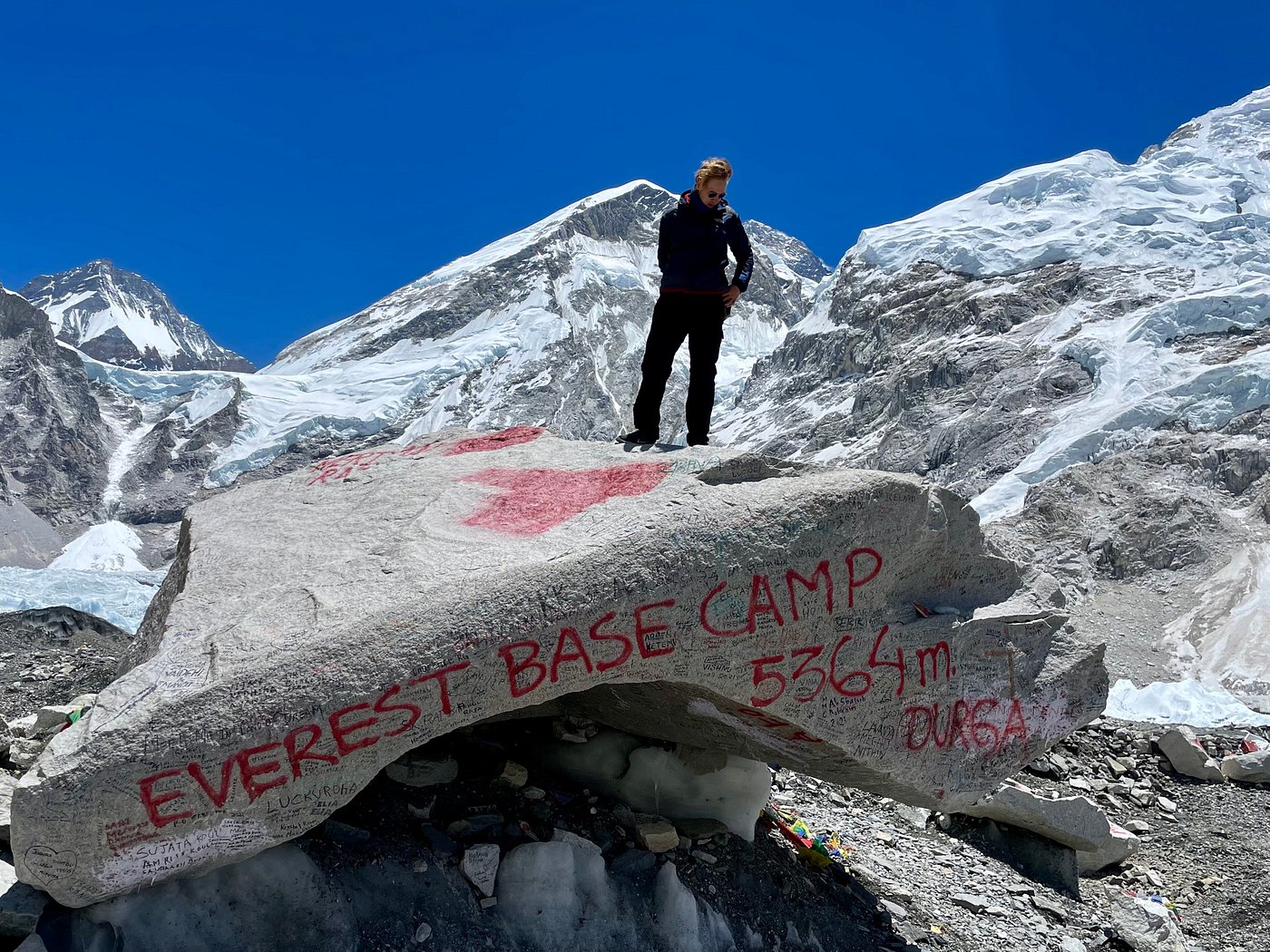
Everest Base Camp sits at 5,364m (17,598 ft).
However, you will go even higher – Kalapathar (the Everest viewpoint with astounding views) is 5,545m (18,192 ft). As this is a day hike, this should not cause any problems as you will return to a lower altitude to sleep.
Tell Me About the Flight to Lukla
Lukla Airport (actually called the Tenzing Hillary Airport after the first two men to ascend Everest) sits at an altitude of 2,846m (9,337 ft). To safely fly into the airport, good weather is required at the starting and ending points. We always recommend that our guests leave for two days at the end of their trek as a contingency plan in case the weather closes. You don’t want to miss your international flight.
As a result of this uncertainty about whether – the weather needs to be good at Kathmandu and Lukla as well as everywhere in between – and the fact that there can be a build-up of tourists waiting for flights should the weather turn bad, another airport has been recently utilized for flights to Lukla.
Ramechhap Airport Flight for the trek
is situated on the Terai and is closer to Lukla than Kathmandu. The weather at Namecheap is generally better than that at Kathmandu. Thus, there is less build-up of delayed flights. On the downside, the airport is an hour’s drive from Kathmandu. This requires tourists to drive (organized bus) through the night to reach Ramechap in time for their early morning flight to Lukla. Departures by bus from Kathmandu are around 3 am. We can look at this positively – another adventure and new scenery to see on route. If you have doubts, please ask us.
Trek Difficulty and Physical Fitness Required for Everest Base Camp Hike
While we recommend you bring only what you will need on the trek to Nepal, we realize many clients go to other countries or parts of Nepal that require different clothing and/or equipment. It is possible to store luggage in your hotel in Kathmandu, most likely at a fee or at our office (depending on demand). We can also store any valuables in our office locker at no charge.
Extend your trip after Everest Base Camp
If you are interested in staying longer in Nepal, we can organize that for you too. If you are keen to extend your trip to the Everest Region, we recommend Island Peak. This is considered a trekking peak. Some climbing gear is required, but you do not have to be an experienced climber to do this climb. It is ideal for those who want to try climbing but have little or no experience and want to see Mount Everest simultaneously. You can combine both treks. Please ask us about dates and prices.
If you would like to visit another part of Nepal, we can recommend both Chitwan National Park and Bardia National Park. Or if your time is short, we can provide Kathmandu Heritage sightseeing with a guide, taking you into a fascinating ancient world and culture.
Cost and the Booking Process for EBC Trek
You can book your trek and other trips via our booking system, which will collect all the necessary information from you. You can pay the deposit or the full amount via credit card. As we require you to book your flight to Lukla, we need a copy of your passport at the time of booking, as per our booking system.
Porter Weight Limit and Information for Trekking Everest Base Camp
We use porters to carry clients’ bags. Porters are also human, so they also have a limit on how much they can carry (more than us, for sure, but there is a limit to their capabilities). A porter’s weight limit is 20 kg, and we will provide you with a kit bag/ duffle bag designed to make it easier for them to carry. Porters are 2:1 ratio. For two clients, one porter
These amazing people are used to walking at altitude and on these rough trails, so they walk faster than the average trekker. As they head off ahead of you and reach the teahouse first, where they will deposit your bag, please ensure you carry what you need for the day with you.
Our porters will start work for you at Lukla airport.
Charging Your Equipment on the Everest Base Camp Trek
Everyone carries electronic equipment these days: phones, cameras, iPads, etc. But on most treks in Nepal, basic facilities have not caught up with modern-day technology. The majority of electricity in the teahouses is solar generated. Someone carried those solar panels up the mountains, and the teahouse owner had to pay for them and maintain them. So it’s only natural they pass this cost on to you. Generally, teahouses will charge you $2 to $3 for your phone or camera. This can become expensive as there are so many wonderful things to photograph. We recommend you carry a power bank or a small solar charger to avoid paying too much. Some great solar chargers clip onto your day pack.
Accommodation on the EBC Trek
On the EBC trek, you will stay two nights in a hotel in Kathmandu and 12 nights in teahouses in the mountains.
What to expect in Kathmandu Accommodation:
We provide our guests with accommodation in a good hotel on a twin-share basis. If you require a higher standard of the hotel, let us know, and we can provide this at an extra charge. Your hotel will have an attached bathroom, good bedclothes, and the usual things you can expect from a good standard. They are located in the heart of the tourist area, Thamel. There is a wide range of restaurants, cafes, and bars nearby and shops for souvenirs and essentials.
Breakfast in Kathmandu in your hotel is included, and there may be either a buffet style or a menu to choose from.
What to expect in a teahouse in EBC Trek:
A teahouse is like a simple guest house on the mountain trails. It provides trekkers with accommodation, meals, and a place to socialize. These provide pretty basic accommodation, either in twin rooms or in dormitories. Toilets and bathrooms are shared, with either a Western-style toilet or a squat style.
Showers normally only have cold water; you will be expected to pay for it in those with hot water on offer. The sleeping rooms consist of beds, blankets, and not much else. Bringing your own sleeping bag is always recommended. There are no ‘single rooms’ unless it is off-season, and you are lucky. Sharing a room is perfectly normal. There is no heating in the sleeping rooms.
Some sort of stove usually warms the dining area. Light is provided by solar. Most teahouses have the ability to charge your gadgets, for which you have to pay. Breakfast and dinner are taken in the teahouses at communal tables where you can discuss the day’s journey with others. Some menus offer a variety of food. Boiled water is usually available, rather than in plastic bottles, which hurts the environment. There is a small charge for boiled water. Bringing your own sterilization tablets/ life straw is a good idea.
Luxury lodges on the Everest Base Camp trail:
Some luxury lodges are at lower altitudes within the Everest Region. While these are not up to Marriott or Hyatt standards, they are extremely comfortable with a good range of amenities. If this interests you, we can point you to our Everest Luxury Lodge Trek for more information. If this interests you, we can point you to our Everest Luxury Lodge Trek for more information.
Upgrade to Helicopters for Everest base camp trek
Helicopters are sometimes used to reach the Everest Region more quickly. There are several options available. For those not able to spend the time trekking, there is a short half-day tour, with a landing on Kalapathar for close-up views of Everest and Everest View Hotel for breakfast. Ask us about the Breakfast on Everest Heli Tour. For those who do want to trek, there is the option to arrive at Lukla by helicopter. Naturally, arriving by helicopter rather than plane adds to the expense, and there must be others in your group to make up the numbers (unless you want to charter a whole helicopter). Please ask us about this option.
Will I be Able to Communicate with Those at Home During the EBC Trek?
There is Wi-Fi and cellular signals at all stages of this trek. This is weather-dependent, however. And trickier as you go higher. Let friends and family know you may be out of communication for several days, so they do not worry.
Group Size for EBC Trek
Your trekking group is generally 8 people, but it is often smaller. If you require a tailor-made private trek, you can choose this option at no additional cost during checkout.
We have found that trekking makes the trip more fun, especially during the evening relaxation.
Arriving in Kathmandu
We will pick you up at the airport in Kathmandu and take you to your hotel. If you are late (flight delay etc.) and have been unable to contact us to let us know, please make your way to the hotel. There are pre-paid taxis at the exit of the airport, which will cost you around Nrs600 – Nrs800 to Thamel. Few people might come up to help you with your bag and later ask for money. Ignore them.
Travel Insurance for EBC Trek
While our insurance covers our team, you are not. Please ensure you have the correct travel insurance before leaving home. That is insurance that covers trekking at high altitudes and the cost of helicopter rescue in the unlikely event it will be necessary.
Safety and Security in Nepal and EBC Trek
In general, Nepal is a very safe country. But please check your home government’s website for the latest information. There may be demonstrations – if you see one, please avoid it. Theft is unusual, but it does happen. Ensure all your valuables are hidden from sight. You can leave any valuables in our office locker while on your trek.
It is unlikely, but if there is any landslide, avalanche,e or earthquake on the mountain, please follow instructions from your guide. Similarly, if you feel unwell at all, please advise your guide.
Tipping Culture in Nepal
It is expected in restaurants and cafes to tip 10% of the bill. Tipping your driver, porter, guide, and other staff on your trek is also normal. Please tip drivers of private vehicles separately. $1 to $5, depending on the length of the journey. Normally tips for the trekking crew are given as a group and depend on the group’s satisfaction.
Local Dress and Culture in Nepal
Please respect the local culture. For example, when entering someone’s house, please remove your shoes and leave them outside. This does not apply to trekking lodges. Please dress conservatively. It is doubtful whether you will wear short shorts on the trek, but please consider this when packing for your adventure. Please dress respectively when visiting religious sites of any kind. Public displays of affection between men and women are still rare in Nepal. Whatever you may witness in the bars of Thamel is not common outside in rural areas!
Money Exchange in Kathmandu
There are plenty of ATMs in Kathmandu which provide Nepali currency. You will only find an ATM in the Everest Region at Namche Bazaar, so bring any cash you need. The ATMs accept Visa and Mastercards and have a limit on each withdrawal. Some shops accept Visa and Mastercard, but there will be a 3 or 4% charge for each transaction. The rate of exchange varies daily at both ATMs and money changer booths. Money changer booths will only change hard currency into Nepali rupees. They do not accept cards. Often it is easier to bring some US dollars, Pounds, Australian Dollars, Singaporean Dollars, Malaysian rings, and Euros with you.
Feedback on the EBC trek
After your trek, we would love to hear from you about how you enjoyed the trip and any suggestions on improving the experience for others.
Related Trips in Everest Region
Everest View Trek | Gokyo Lake Trek | Gokyo Chola Pass EBC Trek | Everest Three Pass Trek | Jiri To Everest Base Camp Trek | Island Peak Climbing | Lobuche Peak Climbing | Mera And Island Peak Climbing | Mera Peak Climbing | Baruntse Expedition | Everest Helicopter Tour
- Satisfied Client
- Personalised Guide
- Instant Response
Get Instant Response:
+977-9851329446 (Whatsapp)