Introduction to Mera Peak and Island Peak Climbing via Ama Lapcha Pass
This amazing climbing adventure combines two popular climbing peaks in Nepal in one trip. The Ama Lapcha Pass, which connects Makalu and Everest Regions, is part of the Great Himalaya Trail (GHT),, which spans the country’s width at a high elevation.
Crossing this Pass is technically challenging, so climbing two peaks in one trip makes this a climbing trip for those with previous high-altitude climbing experience.
Start your adventure by heading south of Lukla airport, leaving behind the main and busy Everest Base Camp trail. With Mera Peak being considered the easier peak, we climb that one first, giving you time to acclimatize and gain confidence in your climbing skills before attempting the more difficult of the two.
Before Mera Peak, the teahouses offered only basic accommodation as this route saw fewer tourists. But the stunning views of Everest, Lhotse, and Makalu from the summit of Mera Peak make up for this slight discomfort. Base Camp at Mera Peak is situated at 5,300 m, with High Camp at 5,800 m.
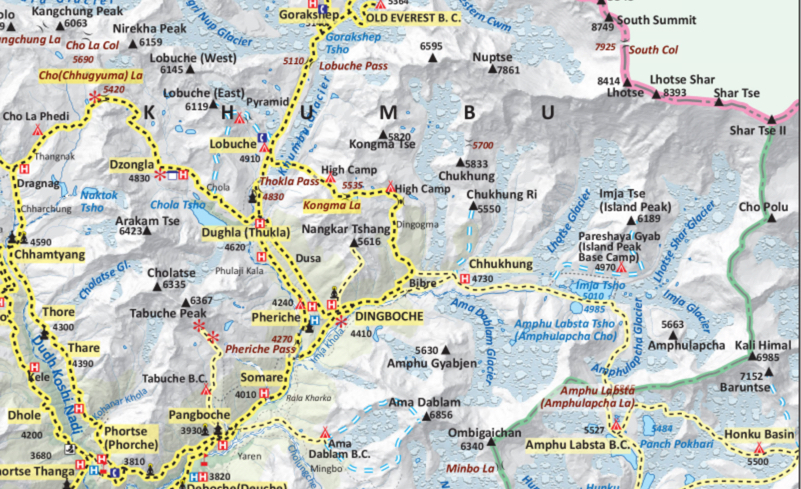
After climbing Mera Peak and crossing the Ama Lapcha Pass, we enter the Everest Region via Chukung. From here, we reach Island Peak.
After climbing Island Peak, you can either descend down to Lukla for the flight back to Kathmandu or add 3-4 days to your trip to Everest Base Camp and follow the classic EBC route back to Lukla via Kalapatthar, Tengboche, and Namche Bazaar. Please confirm this at the time of booking.
Magical Nepal works with experienced, professional Sherpa guides for the whole trip. We provide one main climbing guide for 3-4 climbers. We recommend clients have had previous high-altitude climbing experience.
This trip is best made in April and May or in October and November.
Mera Peak and Island Peak Climbing Highlights
Mera Peak And Island Peak Climbing Itinerary
Day 1: Arrival in Kathmandu
Kathmandu – 1,300 m / 4,265 ft
Welcome to Kathmandu. Today you will have the chance to meet some of the team who will accompany you on your climb. This is also an opportunity to ask many questions. It is also the chance to buy or hire any gear you require.
Arrival in Kathmandu Itinerary Highlights & Timing
- Arrival Time – Tribhuvan International Airport: Your adventure begins as you land in the vibrant capital of Nepal, Kathmandu.
- Transfer to Hotel: Our staff will meet you at the airport and assist with your transfer to your hotel.
- Afternoon – Rest & Explore: Use the rest of the day to rest, explore nearby attractions, or prepare for the trek.
- Evening – Meet the Team: Attend a briefing session to meet the team who will accompany you on your trek. This is an excellent time to ask questions and finalize any gear or equipment needs.
Kathmandu
Day 2: Kathmandu to Lukla Flight and Trek to Paiya
Paiya – 2,730m/ 8,956ft- 5 to 6 hrs
Depart early for the flight from Kathmandu to Tenzing Hillary Airport in Lukla. The scenery on the way ranges from farmlands to hills to stunning mountains. Few people have had this wonderful experience flying into such a high-altitude airport. Once the gear is handed over to the porters, the group sets off to the first stop at Paiya.
Kathmandu to Lukla Flight and Trek to Paiya Itinerary Highlights & Timing
- 3:00 AM – Drive to Manthali Airport (4 hours): Early morning drive to Ramechhap due to changes in flight regulations.
- 7:00 AM – Flight to Lukla (35–40 minutes): Enjoy breathtaking views of the Himalayas during the scenic flight.
- 7:45 AM – Breakfast in Lukla: Meet your local trekking team and enjoy breakfast before starting your trek.
- 8:30 AM – Start Trek to Paiya: Begin trekking through forested trails, cross suspension bridges, and pass small Sherpa villages.
- 2:30 PM – Arrive in Paiya: Reach the day’s destination, settle into your teahouse, and enjoy a warm meal.
Paiya
Day 3: Paiya to Panggom
Panggom – 2,846m/ 9,337 ft – 5 to 6 hrs
Crossing a wooden bridge over the Dudh Koshi River, the often slippery trail takes you to Kar La Pass. After the pass, we hike through Rhododendron and bamboo forests until we reach Pangkoma village. The views of the mountains are amazing – a host of mountains, including Dudh Kund Himal.
Paiya to Panggom Itinerary Highlights & Timing
- 7:00 AM – Breakfast at Paiya: Start your day with a hearty meal.
- 8:00 AM – Start Trek to Panggom: Cross a wooden bridge over the Dudh Koshi River and ascend the Kar La Pass.
- 12:30 PM – Lunch Break: Enjoy lunch along the trail.
- 2:30 PM – Arrival at Panggom: Trek through rhododendron and bamboo forests before reaching Panggom.
Panggom
Day 4: Panggom to Ningsow
Ningsow – 2,846m/ 9,393 ft – 4 to 5 hrs
Today’s trek starts along a rocky path and then through a Rhododendron forest. It continues through hills and ridges, and we can see Mera Peak’s South Face at this time. There are more forests of pine and Rhododendron, which the trail zigzags through and descends into Ningsow.
Panggom to Ningsow Itinerary Highlights & Timing
- 7:00 AM – Breakfast at Panggom: Prepare for the day’s trek.
- 8:00 AM – Start Trek to Ningsow: Trek through rhododendron forests and navigate rocky trails.
- 12:30 PM – Lunch Stop: Rest and refuel at a scenic spot.
- 2:00 PM – Arrival at Ningsow: Descend through pine forests and enjoy views of Mera Peak’s South Face.
Ningsow
Day 5: Ningsow to Chhatra Khola
Chhatra Khola – 2,800m/9,186ft – 7 to 8 hrs
Today the trail is steep and narrow but continues through the forests. Once we reach a stream, we see an interesting stone cave. Continuing through the forest, we should look for wildlife until we reach Chhatra Khola.
Ningsow to Chhatra Khola Itinerary Highlights & Timing
- 6:30 AM – Breakfast at Ningsow: Early start due to the long trek.
- 7:00 AM – Start Trek to Chhatra Khola: Navigate steep and narrow trails through dense forests.
- 12:00 PM – Lunch Break: Enjoy a meal near a stream.
- 3:00 PM – Arrival at Chhatra Khola: Reach the destination while keeping an eye out for wildlife like red pandas.
Chhatra Khola
Day 6: Chhatra Khola to Kothe
Kothe – 3,691m/12,109ft- 6 to 7 hrs
Today there is another chance to spot wildlife such as sloth bears or jungle cats as we go through pine and bamboo forests. We come to a beautiful vantage point above the Hinku Valley. Today’s highlight is the valley below and the great Mera Peak views. Here there is another cave. Considered holy to Buddhists, this cave shows the three elements of Buddha. After lunch, we follow a ridge along the river to Kothe.
Chhatra Khola to Kothe Itinerary Highlights & Timing
- 7:00 AM – Breakfast at Chhatra Khola: Begin your day with a nutritious meal.
- 8:00 AM – Start Trek to Kothe: Pass through pine and bamboo forests, stopping at scenic viewpoints.
- 12:30 PM – Lunch at a Ridge: Enjoy lunch with views of the Hinku Valley.
- 3:00 PM – Arrival at Kothe: End your day at a cozy teahouse.
Kothe
Machhermo
Day 7: Kothe to Thaknak
Thaknak – 4,358m/14,297ft – 3 to 4 hrs
It’s a shorter walking day, which is good as the altitude is rising now. Hiking slowly along the ridge of the Hinku River, we come to Lungsumba Gompa. Here we can explore the gompa – Tibetan for the monastery – which is 200 years old. The mountains on display today are Mera North and other peaks. After the gompa is a short walk to Thaknak, a seasonal village. Livestock is grazed here in the summer. We spend the night in one of the few teahouses.
Kothe to Thaknak Itinerary Highlights & Timing
- 7:00 AM – Breakfast at Kothe: Fuel up for the shorter trek ahead.
- 8:00 AM – Start Trek to Thaknak: Follow the Hinku River ridge, passing Lungsumba Gompa.
- 11:30 AM – Arrival at Thaknak: Reach Thaknak, a seasonal village where livestock are grazed in summer.
Thaknak
Day 8: Thaknak to Khare
Khare – 5,045m/16,486ft- 2 to 3 hrs
Today we hike over the lateral moraine of the Dig Glacier to the Dig Kharka pasture. On the way, we see Hinku Nup and Shar glaciers. It’s a very steep path. However, the views of the mountains, including Charpate Himal and the north face of Mera Peak, are fantastic. Our tented camp is set up at Khare.
Day 9: Khare: Acclimatization and pre-climb training
Khare – 5,045m/16,486ft
Today we spend the day training and checking the gear in preparation for the upcoming climb.
Khare: Acclimatization and pre-climb training Itinerary Highlights & Timing
- 7:30 AM – Breakfast at Thaknak: Enjoy a light meal before the trek.
- 8:00 AM – Start Trek to Khare: Trek over the lateral moraine of the Dig Glacier and pass the Hinku Nup and Shar glaciers.
- 10:30 AM – Arrival at Khare: Reach Khare for a rest and acclimatization.
Day 10: Khare to Mera High Camp
Mera High Camp – 5,780m/18,958 ft
Following the Mera Glacier to Mera Le Pass we push on to High Camp over rock-strewn trails. Camp is set up at Mera High Camp in anticipation of the climb.
Khare to Mera High Camp Itinerary Highlights & Timing
- Morning & Afternoon – Acclimatization: Spend the day adjusting to the higher altitude.
- Climbing Training: Receive essential pre-climb training and check gear in preparation for the summit.
Khare
Day 11: Mera High Camp to Summit and trek to Khongma Dingma
Khongma Dingma- 4850 m / 15912 ft
Today we summit Mera Peak. The climb starts around 2 am with breakfast, followed by a 4 to 5-hour hike to reach the summit. From the summit, we can see Mt Everest, Cho Oyu, Kanchenjunga, Makalu, Nuptse, Lhotse, Ama Dablam, Kangtega, Chamlang, and Baruntse. There are also several other peaks over 6,000m. This is a fantastic photo opportunity while we catch our breath, then return to Mera High Camp for some rest and to discuss the climb and the climb yet to come.
Mera High Camp to Summit trek to Khongma Dingma Itinerary Highlights & Timing
- 2:00 AM – Start Summit Attempt: Begin the challenging ascent to Mera Peak’s summit.
- 7:00 AM – Reach Summit: Stand atop Mera Peak (6,476m / 21,247ft) with panoramic views of Everest, Cho Oyu, and other iconic peaks.
- 10:00 AM – Descent to High Camp: After the summit, descend back to High Camp for rest.
- 1:00 PM – Arrival at Khongma Dingma: Trek down to Khongma Dingma for the night.
Khongma Dingma
Day 12: Khongma Dingma to Seto Pokhari
Seto Pokhari – 5035 m / 16519 ft
In contrast to the last few days, we started walking through yak pastures today. But then we ascend a snowy moraine to Seto Pokhari. This is a glacial lake whose name translates to the white pond. Overhead are Baruntse and Chamlang Himal. Tonight, we sleep in a teahouse at Seto Pokhari.
Khongma Dingma to Seto Pokhari Itinerary Highlights & Timing
- 7:00 AM – Breakfast at Khongma Dingma: Begin the day’s trek.
- 8:00 AM – Start Trek to Seto Pokhari: Walk through yak pastures, ascending to the snowy moraine.
- 2:00 PM – Arrival at Seto Pokhari: Arrive at the glacial lake known as the White Pond, surrounded by peaks.
Seto Pokhari
Day 13: Seto Pokhari to Ama Lapcha Base Camp
Ama Lapcha Base Camp – 5650 m / 18536 ft
Heading to Amphu Lapcha Base Camp, we get clear views of Mt. Everest and the lakes along the Hongu basin. We must cross the Hongu Pokhari to reach the base camp, where we camp for the night.
Seto Pokhara to Ama Lapcha Base Camp Itinerary Highlights & Timing
- 7:00 AM – Breakfast at Seto Pokhari: Prepare for the day’s trek.
- 8:00 AM – Start Trek to Ama Lapcha Base Camp: Follow a path leading to clear views of Mount Everest and the Hongu Basin.
- 1:00 PM – Arrival at Ama Lapcha Base Camp: Set up camp and rest at the base of one of Nepal’s most challenging passes.
Ama Lapcha Base Camp
Day 14: Ama Lapcha Base Camp to Chukung
Chukung- 4750 m / 15580 ft
Hiking through the snow, we reach Ama Lapcha Pass, which consists of serac cliffs and ice shelves. This is one of the most challenging mountain passes in the country.
The ice shelves rise around 6 meters, and technical climbing is required. But from the top, the views are astounding: Mera Peak, Lhotse, Chamlang, and the Hongu Basin are seen. Then rappel down the rocky cliff to flatter ground. The onward trek passes the Imja Glacier and the Imja Valley, with great views of Island Peak on the trail to Chukung, where we stop for the night.
Ama Lapcha Base Camp to Chukung Itinerary Highlights & Timing
- 7:00 AM – Breakfast at Base Camp: Enjoy breakfast before starting the climb to Ama Lapcha Pass.
- 8:00 AM – Start Trek to Chukung: Cross the challenging pass, descend through rocky cliffs, and reach Chukung.
- 5:00 PM – Arrival at Chukung: Settle into a teahouse for a well-deserved rest.
Chukung
Day 15: Chukung to Island Peak Base Camp
Island Peak Base Camp- 5,087 m/ 16,690 ft
The trail goes along the glacial moraine from Chukung, then down to the runoff from Imja Lake. Passing between some hills, we come out on a sandy plain at Island Peak and Lhotse. Hiking on to Island Peak Base Camp has spectacular views of Imja Valley. We can check the gear again in the afternoon and prepare for the climb.
Chukung to Island Peak Base Camp Itinerary Highlights & Timing
- 7:00 AM – Breakfast at Chukung: Start your day with an energizing meal.
- 8:00 AM – Start Trek to Island Peak Base Camp: Trek through the glacial moraine and past Imja Lake to reach the base camp.
- 11:00 AM – Arrival at Island Peak Base Camp: Set up camp and prepare for the ascent.
Island Peak Base Camp
Day 16: Island Peak Base Camp to Summit and Down to Island Peak Base Camp
Island Peak Base Camp – 5,087 m/ 16,690 ft
We will summit Island Peak today with the correct weather conditions (6,189m/ 20,305ft). We start very early – 2 am because it’s a long hard climb. There is a rocky scree and steep rocks, and when we reach 5,700m, the thin air begins to affect us. But we keep going and reach a narrow ridge, which is the start of the glacier.
We need crampons, ropes, and ice axes to make this crossing which can take 1 to 2 hours. At the Headwall, the team will fix climbing ropes. Climbing up the Headwall, you will reach the summit of Island Peak, with its amazing views. The summit is small, so we remain roped there for a while.
Then we abseil down the Headwall. Again, roped together, we retrace the trail through the glacier. At High Camp, there is time for a short rest while the gear is packed. Then trek down to Island Peak Base Camp, where we get a well-deserved rest.
Island Peak Base Camp to Summit and Down to Island Peak Base Camp Itinerary Highlights & Timing
- 2:00 AM – Start Summit Attempt: Begin the challenging climb up Island Peak.
- 7:00 AM – Reach Summit (6,189m / 20,305ft): Stand atop Island Peak, taking in the panoramic views.
- 10:00 AM – Return to Base Camp: Descend to the base camp, reflecting on your achievement.
Day 17: Island Peak Base Camp to Pangboche
Pangboche – 3,985 m/ 13,074 ft
Today we hike to Pangboche from Island Base camp.
Island Peak Base Camp to Pangboche Itinerary Highlights & Timing
- 7:00 AM – Breakfast at Base Camp: Start the trek back towards Pangboche.
- 12:30 PM – Arrival in Pangboche: Settle into a teahouse and enjoy the relaxing atmosphere.
Pangboche
Day 18: Pangboche to Namche
Namche – 3440 m / 11286 ft
We pass through Tengboche on the way back to Namche Bazaar. Here there is a bakery with some delicious cakes and coffee. You might want to make a quick stop or push on to Namche Bazaar, where you can get good coffee and cake! Celebrate your achievement this evening in a comfortable lodge.
Pangboche to Namche Bazaar Itinerary Highlights & Timing
- 7:00 AM – Breakfast at Pangboche: Fuel up for the day’s trek.
- 12:00 PM – Arrival at Namche Bazaar: Explore the bustling bazaar, indulge in some local treats, and celebrate your accomplishments.
Namche Bazaar
Day 19: Namche Bazaar to Lukla
Lukla – 2860 m / 9383 ft
Today we take a long, relatively easy trek down to Lukla for our last night in the Himalayas.
Namche Bazaar to Lukla Itinerary Highlights & Timing
- 7:00 AM – Breakfast at Namche Bazaar: Begin your trek back to Lukla.
- 4:00 PM – Arrival in Lukla: Celebrate the end of your trek with a final night in the mountains.
Lukla
Day 20: Lukla to Kathmandu Flight
kathmandu – 1400 m / 4593 ft
Say goodbye to your climbing team before your early morning flight back to Kathmandu, with time for a bit of shopping before a truly celebratory dinner.
Lukla to Kathmandu Flight Itinerary Highlights & Timing
- 7:00 AM – Flight to Kathmandu: Take a scenic flight back to Kathmandu.
- 9:00 AM – Arrival in Kathmandu: Transfer to your hotel and enjoy some free time for shopping or relaxing.
Day 21: Departure
Our staff will ensure you get to the airport on time if you have an international flight. But let us know if you are staying longer in Nepal, and we can discuss any future plans you may have.
Not satisfied with this Itinerary?
Are you interested on planning custom trip? It only takes 2 minutes.
Includes
Veg
Wide variety of Vegeterian food is available on the trek
Vegan
Wide variety of Vegan food is available on the trek
Packing List
| Items | Details | Quantity |
|---|---|---|
| Underwear | Underwear Breathable synthetic | 3 |
| Socks | Wool BYO | 3 |
| Bra | Sports BYO | |
| Base layers – Pants | Merino wool BYO | 1 |
| Trekking shirt | Synthetic lightweight BYO or purchase it in Kathmandu | 2 |
| Rain pants | Synthetic lightweight Frogg Toggs are excellent | 1 |
| Trekking pants | Synthetic lightweight BYO or purchase in Ktm | 2 |
| Hiking Shoes/Boots | BYO Salmon Quest 4D or Xultra 3 or 4 | 1 |
| Camp shoes | Down booties BYO or purchase in Ktm | 1 |
| Gloves | One pair of thin merino wool. 2nd pair thick insulated | 2 |
| Hat | Sun hat or peak cap with neck protection. BYO | 1 |
| Down Jacket | BYO | 1 |
| Wind Breaker | BYO | 1 |
Note: Sleeping bags and down jackets can be rented in Kathmandu, while all other trekking equipment can be easily purchased. We at Magical Nepal will assist you in getting all your essentials sorted, ensuring you’re well-prepared for your adventure.
Kathmandu to Lukla Flight
Due to recent government regulations, there are no direct flights from Kathmandu to Ramechap. As a result, we must undertake a six-hour drive from Kathmandu to Ramechap. Since there are no good hotels in the area, we will need to depart at 1:00 AM to catch our flight to Lukla from Ramechap.
Read Before your book Mera Peak and Island Peak
To help you determine if the Mera Peak and Island Peak is right for you, we’ve provided detailed information on key aspects such as flight details, trek difficulty, and the best times to visit. Each section also includes a video explanation to guide you in planning your trip smoothly.
If you’re still unsure whether this trek is the perfect choice for you, feel free to reach out to us via email or WhatsApp. We’ll get back to you within 24 hours to answer any additional questions.
Both Mera Peak (6,476m) and Island Peak (6,189m) are classified as challenging high-altitude climbs, requiring physical endurance, technical skills, and proper acclimatization.
Challenges
- High Altitude:
- Risk of altitude sickness due to extreme elevation.
- Acclimatization days are crucial to prevent AMS (Acute Mountain Sickness).
- Technical Climbing Sections:
- Island Peak features steep ice walls, fixed rope ascents, and a narrow summit ridge.
- Mera Peak has a long glacier ascent requiring crampons and ice axe use.
- Demanding Terrain:
- Both peaks involve long trekking days and glacier crossings.
- Climbers must navigate crevasses, steep ascents, and exposed ridges.
Who is This Suitable For?
- Experienced trekkers with prior high-altitude experience.
- Those with basic mountaineering skills (familiarity with crampons, ice axe, and rope techniques).
- Individuals with strong physical fitness and endurance for long days of trekking and climbing.
Training & Preparation
- Cardio & Endurance Training – Running, cycling, and stair climbing.
- Strength Training – Core, leg, and upper body exercises for carrying gear and climbing.
- Technical Skills Practice – Glacier travel, ice climbing, and rope management.
With proper preparation, these peaks offer a rewarding adventure, breathtaking Himalayan views, and a chance to experience Nepal’s iconic mountaineering routes.
Mera Peak and Island Peak in Spring (March to May)
Spring is one of the most popular seasons for trekking and climbing in Nepal, offering excellent conditions for this challenging itinerary.
- Weather: Stable weather with clear skies and moderate temperatures during the day. Nights are colder but manageable.
- Visibility: Panoramic views of Everest, Lhotse, Makalu, and other peaks are at their best during this time.
- Trail Conditions: Snow from the winter season begins to melt, but some sections near Ama Lapcha Pass and the peaks may still have snow.
- Flora and Fauna: The trails come alive with blooming rhododendrons and other Himalayan flora, adding vibrant colors to the trek.
Ideal For: Climbers looking for the best combination of favorable weather, scenic beauty, and clear views.
Mera Peak and Island Peak in Autumn (September to November)
Autumn is considered the best season for high-altitude climbing in Nepal due to its stable weather and breathtaking vistas.
- Weather: Post-monsoon skies are clear, providing excellent visibility. Daytime temperatures are comfortable, and nights are cold, especially at high altitudes.
- Visibility: Crystal-clear skies and unparalleled mountain views make autumn the preferred season for photographers and climbers alike.
- Trail Conditions: Dry and firm trails with minimal snowfall, making it easier to navigate technical sections like Ama Lapcha Pass.
- Festivals: The season coincides with major Nepali festivals like Dashain and Tihar, offering a glimpse into the local culture.
Ideal For: Climbers prioritizing clear weather and stable trail conditions.
Off-Seasons in Mera Peak and Island Peak
Winter (December to February)
- Weather: Extremely cold temperatures, especially above 5,000 meters. Heavy snowfall can block the trails and make Ama Lapcha Pass impassable.
- Visibility: Views are clear on sunny days, but the harsh conditions make climbing risky.
- Not Recommended: Only suitable for highly experienced climbers with winter climbing expertise.
Monsoon (June to August)
- Weather: Frequent rain in lower altitudes and snow in higher regions make the trails slippery and challenging.
- Visibility: Clouds and rain obscure mountain views.
- Trail Conditions: Landslides, muddy paths, and leeches are common in lower regions.
- Not Recommended: Avoid this season due to safety and visibility issues.
Key Challenges and Preparation for Mera Peak and Island Peak
Climbing Mera and Island Peaks via Ama Lapcha Pass demands excellent physical fitness and prior trekking experience. Altitude sickness is a significant concern, so gradual acclimatization and hydration are vital. The technical skills required for Ama Lapcha Pass include using ropes, crampons, and ice axes.
Before attempting Mera Peak (6,476m) or Island Peak (6,189m), climbers must obtain several permits issued by the Nepal Mountaineering Association (NMA) and local authorities. These permits help regulate trekking and climbing activities while contributing to conservation efforts.
Permits for Mera Peak Climb
To climb Mera Peak, you will need the following:
Mera Peak Climbing Permit (Issued by NMA)
- Varies by season:
- Spring (March-May): USD 250 per person
- Autumn (Sept-Nov): USD 125 per person
- Winter & Summer (Dec-Feb, June-Aug): USD 70 per person
Makalu Barun National Park Entry Permit
- Required as Mera Peak lies within Makalu Barun National Park.
- Cost: NPR 3,000 (approx. USD 25) per person.
Local Rural Municipality Permit (Khumbu Pasang Lhamu Municipality)
- Required for trekking in the Solu-Khumbu region.
- Cost: NPR 2,000 (approx. USD 15) per person.
Permits for Island Peak Climb
To climb Island Peak, you will need the following:
Island Peak Climbing Permit (Issued by NMA)
- Varies by season:
- Spring (March-May): USD 250 per person
- Autumn (Sept-Nov): USD 125 per person
- Winter & Summer (Dec-Feb, June-Aug): USD 70 per person
Sagarmatha National Park Entry Permit
- Required as Island Peak is located within Sagarmatha National Park.
- Cost: NPR 3,000 (approx. USD 25) per person.
Khumbu Pasang Lhamu Rural Municipality Permit
- Mandatory for all trekkers and climbers in the Everest region.
- Cost: NPR 2,000 (approx. USD 15) per person.
Where to Obtain These Permits?
- Climbing Permits (Mera Peak & Island Peak):
- Issued by the Nepal Mountaineering Association (NMA) in Kathmandu.
- Trekking agencies often arrange these for clients.
- National Park Permits:
- Available at the Nepal Tourism Board (NTB) office in Kathmandu or at park entry points.
- Local Municipality Permit:
- Issued in Lukla (for Island Peak) or Khare (for Mera Peak).
Cost of the Expedition for Mera Peak and Island Peak
The cost of this expedition depends on factors such as permits, guide services, accommodation, and gear rental. On average, expect to spend $3,500 to $5,000 for a guided climb. Budget-friendly tips include traveling in groups and renting rather than buying gear.
The Mera Peak and Island Peak climbing expedition via Ama Lapcha Pass is a once-in-a-lifetime journey that tests your limits while rewarding you with unforgettable experiences. Whether it’s the thrill of crossing the challenging Ama Lapcha Pass or standing atop two iconic Himalayan peaks, this adventure promises memories to last a lifetime.
Ready to take on the challenge? Start planning your expedition today!
Importance of Acclimatization
Acclimatization is crucial for a successful summit attempt on Mera Peak (6,476m) and Island Peak (6,189m). The rapid ascent to high altitudes can lead to altitude sickness if the body does not gradually adjust to lower oxygen levels.
To minimize risks, climbers should follow an acclimatization schedule that includes:
- Gradual Ascent: Gaining altitude slowly and allowing the body to adjust.
- Acclimatization Days: Taking rest days at specific points (e.g., Khare for Mera Peak, Chhukung for Island Peak) to help the body adapt.
- Climb High, Sleep Low: Climbing to a higher elevation during the day and descending to a lower altitude to sleep.
- Hydration & Nutrition: Drinking plenty of fluids (at least 3-4 liters per day) and consuming high-calorie meals for energy.
- Proper Rest: Ensuring adequate sleep to allow the body to recover.
Altitude Sickness and Its Symptoms
At high elevations, the oxygen level drops significantly, leading to Acute Mountain Sickness (AMS) or severe altitude-related illnesses like HACE (High Altitude Cerebral Edema) and HAPE (High Altitude Pulmonary Edema).
1. Acute Mountain Sickness (AMS)
Mild to moderate symptoms:
- Headache
- Dizziness
- Nausea or vomiting
- Loss of appetite
- Difficulty sleeping
- Fatigue
How to Prevent AMS
- Follow a proper acclimatization schedule.
- Avoid rapid altitude gain.
- Stay hydrated and avoid alcohol.
- Take prescribed altitude sickness medication (e.g., Diamox).
- If symptoms persist, descend immediately to a lower altitude.
2. High Altitude Cerebral Edema (HACE) – Severe Condition
Severe symptoms requiring immediate descent
- Confusion or loss of coordination
- Hallucinations
- Severe headache
- Inability to walk properly
- Loss of consciousness
3. High Altitude Pulmonary Edema (HAPE)
Severe symptoms requiring urgent medical attention:
- Shortness of breath even at rest
- Persistent cough with pink, frothy sputum
- Extreme fatigue
- Bluish skin or lips due to lack of oxygen
Emergency Response & Treatment
If symptoms of HACE or HAPE appear, the only effective treatment is IMMEDIATE DESCENT to a lower altitude. Supplementary oxygen and medications like Dexamethasone (for HACE) or Nifedipine (for HAPE) can help manage symptoms temporarily.
Your climbing journey to Mera Peak and Island Peak will involve different types of accommodation, from hotels in Kathmandu to teahouses in the mountain trails and basic tents in the high-altitude sections.
Accommodation in Kathmandu
Before and after your climb, you will stay in a comfortable hotel in Kathmandu, typically in the Thamel area, the heart of the city’s tourist hub. The hotel will provide twin-sharing rooms with attached bathrooms, clean bedding, Wi-Fi, and a restaurant serving breakfast. If you prefer a higher standard of accommodation, upgrades to luxury hotels can be arranged.
Teahouse Accommodation on the Trek
On your trek towards Mera Peak and Island Peak, you will stay in teahouses in villages like Lukla, Chutanga, Khare (for Mera Peak) and Dingboche, Chhukung (for Island Peak). These are simple lodges that offer twin-sharing or dormitory-style rooms with basic bedding. While some places provide blankets, it is highly recommended to bring your own sleeping bag for warmth, especially as temperatures drop at night.
Shared bathrooms with basic facilities are common, and in higher altitudes, hot showers may be available at an extra charge. The dining areas are usually warmed by a central stove, creating a cozy space for trekkers to relax, eat, and socialize.
Tent Accommodation at Base Camps
As you ascend towards Mera Peak High Camp and Island Peak Base Camp, the teahouses disappear, and camping becomes the only option. At base camps, you will sleep in expedition-style tents, provided and set up by the trekking team. These tents are sturdy, designed to withstand harsh mountain conditions, and include sleeping mats for insulation. Dining tents are also set up, where meals are prepared by the climbing crew.
There are no permanent toilet facilities at these base camps, instead, temporary toilet tents are arranged.
The food on both Mera Peak and Island Peak expeditions is designed to keep you energized and healthy throughout the climb. While in Kathmandu, you can enjoy a variety of cuisines, but in the mountains, food options become simpler and are typically vegetarian to ensure freshness.
Meals in Teahouses
Teahouses provide a menu with a mix of Nepali, Tibetan, and basic Western food options.
Breakfast Options:
- Tibetan bread or chapati with jam, honey, or peanut butter
- Porridge with milk or honey
- Pancakes (banana, apple, chocolate)
- Omelets (plain, cheese, vegetable)
- Tea, coffee, hot chocolate
Lunch Options:
- Dal Bhat (traditional Nepali meal with rice, lentils, vegetable curry, and pickles) – unlimited refills!
- Fried noodles (vegetable, egg, or cheese)
- Pasta with tomato or cheese sauce
- Sherpa stew (a thick, nutritious soup with vegetables, sometimes with noodles)
- Fried rice or boiled potatoes
Dinner Options:
- Garlic soup (helps with altitude acclimatization)
- Thukpa (Tibetan-style noodle soup)
- Vegetable momos (dumplings)
- Pizza (availability varies with altitude)
- Mashed potatoes with cheese or egg
- Rice pudding or custard for dessert
Drinks available include tea (ginger, lemon, honey, or mint), coffee (instant), and soft drinks where available.
Food at Base Camps
Once you reach the base camps of Mera Peak and Island Peak, meals are prepared by the expedition cook and climbing team. The menu is designed to provide maximum energy while being easy to digest at high altitudes.
Typical Base Camp Meals:
- Breakfast: Porridge, chapati, cheese, eggs, tea/coffee
- Lunch: Instant noodles, soup, rice, and lentils
- Dinner: Pasta, potatoes, vegetable curry, soup
- Hydration: Warm drinks like ginger tea, hot lemon, and plenty of boiled water
At high altitudes, eating well is crucial to maintain strength and energy, even if you lose appetite due to altitude effects. Climbing teams ensure food is nutritious and suitable for high-altitude trekking.
Trekking to Mera Peak and Island Peak is not just an adventure—it’s an immersion into the rich culture of the Sherpa, Rai, and Tamang communities. Along the way, you’ll experience warm hospitality, ancient monasteries, and vibrant traditions.
Local Hospitality & Traditional Food
Villages along the trail offer a glimpse into the Himalayan way of life, where locals welcome trekkers with smiles and hearty meals.
Traditional Foods to Try
- Yak Butter Tea – A salty, energy-packed drink.
- Dal Bhat – A filling meal of rice, lentil soup, and vegetable curry.
- Tsampa – Roasted barley flour, often mixed with butter tea.
- Sherpa Stew (Syakpa) – A thick, warming soup with noodles and vegetables.
- Momos – Delicious Tibetan dumplings.
If your trek coincides with local festivals, you’ll witness traditional dances, prayers, and celebrations:
Festivals & Cultural Celebrations
- Mani Rimdu (Oct-Nov) – A famous Sherpa festival with masked dances at Tengboche Monastery.
- Dumji (June-July) – Celebrated in Sherpa villages with music and feasting.
- Lhosar (Feb-March) – Tibetan New Year, filled with prayers and festivities.
Sacred Monasteries & Spiritual Landmarks
Trekking through these regions, you’ll encounter Buddhist monasteries, stupas, and prayer wheels, reflecting the spiritual heart of the Himalayas.
Notable Monasteries
- Pangboche Monastery – One of the oldest in the region, with an alleged yeti relic.
- Thame Monastery – A peaceful spiritual site, home to Mani Rimdu ceremonies.
- Tagnag Monastery (Mera Peak Route) – A small, serene monastery along the trail.
- Chhukung Monastery (Island Peak Route) – Offers stunning mountain views.
Etiquette Tips: Walk clockwise around religious sites, remove your shoes before entering, and avoid pointing with your fingers.
Extend Your Cultural Experience
Stay in a Local Village – Spend a day in Khumjung or Pangboche for a deeper connection with Sherpa life.
Visit Namche Bazaar – Explore the Sherpa Museum and local markets.
Attend a Puja Ceremony – Receive a blessing at a monastery before your summit attempt.
Trekking Mera Peak and Island Peak is not just about the climb—it’s a journey into the heart of Himalayan culture, where tradition, spirituality, and adventure.
Want to read later?
Download the PDF and read it later.